


 Apple Podcasts

 Spotify

 Youtube Music
 RSS Feed
Buying Spring Chicks? Answer This First – Audio Edition
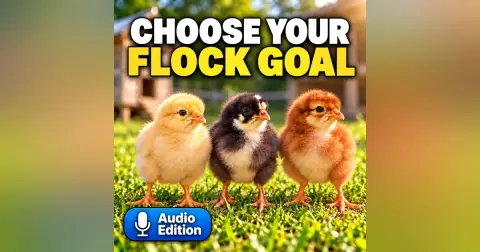
Buying spring chicks? Before you choose a breed or order another dozen, answer one question: What do you want your flock to do?
Eggs for breakfast, meat for the freezer, birds to show, or simply chickens you enjoy—your answer helps you choose birds that fit your goals, your space, and your everyday life.
In this Audio Edition, the Poultry Keepers 360 team—Rip Stalvey, livestock nutritionist Jeff Mattocks, Carey Blackmon, and Sue Dobson—talks through the decisions worth making before chicks come home. You'll hear why the same breed can give different results, what bargain chicks may really cost, and how adding birds can quickly stretch your time and facilities.
We cover choosing birds for your climate, temperament around children, planning for family egg needs, finding exhibition stock, and keeping breeding plans manageable. We finish with a buying checklist, including what to do with extra males and what needs to be ready before the chicks arrive.
Chapter
00:00 What do you want your flock to do?
00:41 Same breed, different results
02:27 Hatchery birds and standardbred birds
04:05 Choosing chickens for your climate
05:38 Coop space and chicken math
07:26 Choosing birds when children help
08:36 Different breeds, different housing needs
09:36 The time and cost of a growing flock
11:59 What bargain chicks really cost
13:20 A word from The Fertrell Company
13:50 How many hens does your family need?
15:55 Planning replacement layers
17:06 Buying birds for poultry shows
19:59 Eggs, meat, and bone broth: your goals count
21:21 Matching breeding plans to your facilities
24:38 Your chick-buying checklist
26:30 Plan for extra males before buying
27:17 Have the brooder ready first
27:39 Finish this sentence: I want my flock to...
28:24 Your next listen: choosing the right birds
Poultry Keepers 360
Helping Poultry Keepers Make Better Decisions.
Recommended next episode
Did You Choose the Right Breed—but the Wrong Birds? – Audio Edition
Frank Reese joins the team for a closer look at why the breeder and the line matter as much as the breed name.
https://www.thepoultrykeeperspodcast.com/did-you-choose-the-right-breed-but-the-wrong-birds-audio-edition/
This Audio Edition features a conversation from a previous PK360 LIVE video broadcast, edited and tightened for those who prefer to listen.
Watch the original LIVE conversation here: https://youtube.com/live/e86WPLgPzEk
#BuyingChicks #BackyardChickens #PoultryKeepers360
Join our Facebook Groups:
Poultry Keepers 360 - - https://www.facebook.com/groups/354973752688125
Poultry Breeders Nutrition - https://www.facebook.com/groups/4908798409211973
What do you want your flock to do? Tonight we're gonna help you match your chicks to your goal. If you want eggs, you don't want heavy heavyweight meat birds. If you want meat, you don't want egg layers. If you want birds that grow quickly to produce meat, you don't want a heritage bird. If you simply enjoy having chickens, is that enough of a goal? I think it is. I had uh birds for enjoyment a long time before I got into showing.
Speaker 3Yep.
Rip StalveySo let's here's a good question. And Jeff, I'm gonna start with you. Two people by the same breed, but end up with very different birds. How can that happen?
Jeff MattocksThat was the parting comment right before we went live was you know different management styles, how much space you give them, what are you feeding them, right? All of that. You and I, Rip, could split, you know, we could go down the tractor supply and buy 20 what what they call Rhode Island Reds. And not that we're gonna do that, but I bring half to Pennsylvania, you raise half in Florida, I use the feed that I can get locally, you use the feed that you can get, right? Or what you've been using. And you know what? In 16 weeks, they're not going to be exactly the same, right? So the feed's different, the manager's different, right? You you got more time to spend with them than I do. I'm gonna go out there and chuck them feeding water, and I gotta go, right? So you know, personal interaction is is gonna play into it, environment's gonna play into it, feed's gonna play into it, right? Living space, everything is going to be a factor in how a bird develops.
Speaker 2You know, I even think that if the two of y'all managed to get the exact same feed, because the environment's different, y'all would still have pretty different results.
Rip StalveyYep, exactly. And the other side of that coin is too, and and I know a lot of people do this and they wind up being disappointed, but you can get hatchery barred rocks. Okay, they're barred rocks. You can get barred rocks from Frank Reese, they're barred rocks, same breed, but they perform entirely differently. Frank birds grow a little bit slower, they still lay a good number of eggs, they put on a lot of meat, but it takes them longer to do it. Hatchery birds, they lay a lot more eggs, but they don't have much in the way of a body on them either. So just remember, just because it's the same breed doesn't mean the same performance. So if you're talking to somebody about getting birds from them, and if performance is important to you, be sure and ask them, hey, what is your performance like? What are their strong points and what are their weak points? And I think one question I I learned to ask myself early on when I was thinking about adding a new breed or new birds from somebody was will those birds fit well into my everyday life? Definitely tell you you can't you can't overstress management to people about their birds. You you've got to practice good management skills, or you're just not gonna have a successful plot. Right. So, what do you think keepers should consider about their climate for choosing birds? I know you're kind of in that borderline out there where you can get real hot and then you can also get real cold real quick.
Sue DobsonYes, yeah. Climate really plays in on how well the birds grow, number one, and then your housing arrangements come winter time. Are they cold hardy? Are they adaptable? Like my big reds, do they have these big old combs that are gonna frostbite? Are you gonna need to take precautions to protect those birds? If you're just breeding, maybe not, but if you're showing like I do and breeding, then I have accommodations to put those big birds in to keep their combs from getting frostbit. We had a cold snap last year that caught me off guard and it got both the boys, and you know, it was completely my fault. And I should have done like Rip told me, go out there and bring them in the house and put them in a cardboard box. And and then my crackers, on the other hand, they're very cold hardy. The the cold doesn't bother them at all.
Speaker 4Um they don't have much of a comb either.
Speaker 3The boys do have a pretty good sized comb. The girls not so much, but the boys do. But it sits so close to their head and up against that crest that it it does help insulate them like a toboggan.
Rip StalveyJeff, how much uh attention should people pay to how much space and room they have in their coop for birds?
Jeff MattocksOkay, it it it's it's a body weight thing. The bigger the bird, the more space they need, right? And you know, how and the other thing is is how often you're gonna go clean it. Okay. So just observing in my time of working with chicken keepers now, you know, getting close to 30 years, is what the environment can tolerate is four pounds of chicken weight per square foot per day. So let's say you only want to clean out the coop, you know, once a week, where you're gonna go freshen it up, add bedding, whatever, then you, you know, depending on the size of your chicken, you know, you need at least seven square foot for a four-pound chicken, right? And the bigger they get, the more they eat, the more they poop, the more room they need, right? So, and they just gotta have good living space. And when you cheat the numbers, you're gonna have cannibalizing, you're gonna have grumpiness, you're gonna have fighting, right? Um, just things you don't really want to have. But I see a lot of folks with coops in their backyard, and the old chicken math thing takes over, right? They got a coop big enough for eight. Next thing you know, they got 16, and they wonder why they got problems. Okay, right. The environment can only tolerate so much capacity.
SpeakerCarrie, I've been saving this question for you because I know you and your wife foster kids when you frequently have small children around. If children will be helping their parents with the flock, okay, what questions should a family ask someone when they're thinking about getting birds from them?
Carey BlackmonI would ask them I would I would be straight up. I'd ask them if my toddler could come over and see their birds. And because a lot of times the salesman kind of kicks in, and I hate to say it, but the breeder may bend the truth about them being docile, or they may not have had people young people around. So they can't really accurately answer that question, right? And I would, you know, I I would want to introduce my toddler to the chickens and see how they reacted. Like some of my chickens, when they come out and help, they'll take off running. Others, they come right up to them, you know.
SpeakerSue, here's here's one for you because I know you manage multiple breeds. You've got crabcours and you've got Rhode Island Reds. What changes would somebody have to make in their facilities if they decide they want to keep more than one breed? Or even maintain separate breeding groups? It would apply to both.
Speaker 3Well, the like like you were discussing, like Jeff was saying, the size of the coop, the Krebcurs can stand and adapt to way more of them in a smaller coop than the reds can. The reds need room. The the Krebs also need a covered run. They they every run that I have that I have the Krebs in, they all have netting over the top to keep the hawks off of them because they simply can't see overhead.
SpeakerI want to talk about a subject that is near and dear to my heart because I found myself in the middle of it. And that's what can happen when even one breed can be more trouble to you than you begin to imagine. I started out with I don't know, probably three breeding pens of Rhode Island Reds. And pretty soon I started getting orders right and left for chicks or for hatching eggs, and I couldn't meet the need. So I had to expand that. And so I went from three breeding fins to six. And then ultimately it happened again, and I had to put on more breeding. I finally wound up with 12 breeding pens of probably six to ten females in each pen. And ultimately, you've got to have more time.
Speaker 3Exactly.
SpeakerAnd you know how long it takes you to care for your sm your flock, whatever size it is now. But when you start doubling it and tripling it, the time becomes astronomical. The investment is just crazy. So before you decide to take on more, those are things that you need to answer. You know, can I afford all this extra infrastructure? Can I afford, do I have the time to spare to take care of all these birds?
Speaker 3Right. Do I have the time and the energy?
Speaker 2Yeah. Energy, energy is a thing too, sometimes.
Speaker 3Yeah, to take care of them properly. You know, that's the key word, take care of them properly.
SpeakerAnd I you know, I know it's so easy for people to see a bird, a breed that they oh man, that's a beautiful bird. And it is, no doubt about it. But you get that one, and then once you make that that mistake, it's easy to get a third breed. Yeah, yeah, and at that point you're becoming a collector and not a breeder, right? Because it takes a lot of time, it does, and it's difficult to learn how to effectively breed and manage one breed and do it well, and then you've got to add in more and more and more as you as you expand your number of breeds. Here's an interesting question: what does that bargain really cost you? I mean, you may be able to find chicks five for a dollar and you bring a bunch of them home, but is that really saving you any money?
Speaker 4Probably.
Speaker 1Can I can I tell a story now, Rip?
Speaker 4Go go for it.
Speaker 1Go for it. When I was a youngster, when I first started working in the feed mill, right? My dad and uncles, they would have what they called chick day, right? If you come in and you bought a 50-pound bag of feed, you got 25 chicks for free. Well, what they did is they worked Man, that's a good idea. Now, wait a minute. Now, wait a minute. What they did is they worked out a deal with the hatchery for that day, and they got male leghorns that were sexed out, right? And they got them for almost nothing. They got them for the cost of shipping, okay? So they could afford to give away 25 chicks for that bag of feed. People never caught on. They always thought it was a great deal, right? And you put you put tons of feed through those chickens trying to get them big enough to eat, and they just never get there.
SpeakerWe would like to take a short break to express our appreciation to the Petrell Company for their sponsorship of the Poultry Keepers 360 Live programming. Fortrel has been a trusted name in sustainable farming and poultry nutrition for decades, and their commitment to providing high-quality, natural products aligns perfectly with the values we hold there in our poultry community. Thank you, Petrell, for partnering with us to empower poultry keepers everywhere. We're truly grateful for your dedication and support. Jeff, if somebody decides they want to keep chickens for eggs for the family, what are some of the things they should look at and they should evaluate? Questions that they should ask?
Speaker 1Okay, so make first off, make the assumption if you're going with a standard breed, okay, that for about a year, you're going to average about 70% production. So for every 12 chickens, you're going to get you know eight eggs, 8.4 eggs. Some days eight, some days none, right? So, you know, you need to be, you need to know what your egg usage is going to be. Otherwise, you're going to be giving eggs away to friends and family, or you're not going to have enough, right? So, you know, sit down and you know, nobody does the math on over that 12-month period, I would assume 60 to 70 percent production, right? It's gonna be highs and lows, they're not gonna all, you know, it's not gonna all be and you're gonna end in timing, right? So most people find that they're close to home during the school season. So they need the eggs from September through May. Then they really should be getting those bullets to start laying at about the beginning of September, so they have eggs through the end of the school year. Because people start taking vacations and doing other things, and they don't want to be tied down to chickens June, July, and August if you have children in school. So you got to look at your calendar, you need to be realistic. Who's gonna take care of them when you go on vacation? So I don't know. It just there's a lot to it. There's a lot of thinking that goes into you know what you're doing with your chickens.
Speaker 3I've seen people do two-year programs with like hatchery birds. They'll they'll buy them, grow them two years, and then the beginning of that second year, then they'll go back and buy new chicks to take over that flock because you know they're egg production? Egg production, thank you, Carrie. I just blank the the production has gone down so on that second year, and so they raise the chicks up and then the old hens they'll put in the freezer, and that way they've got a meat source, an egg source, and it's kind of continual program. And that that'd be more with hatchery birds, but I'm looking at you know, doing some of the same things here with these standard bred birds.
Speaker 1Well, you should, and you could, but see, you know, you're starting to manage the molt a little bit more, Sue, right? You're starting to, you know, you're starting to work the birds more, you're managing the birds more appropriately, so you could do that.
SpeakerSo Sue, I got a question for you now. We talked about eggs for breakfast production birds. Let's say somebody wants to start showing next year, okay. And they see inexpensive chicks advertised under their favorite breed's name. What should those people check before they buy the chicks?
Speaker 3Well, what what do the parents look like? That'd be the first place I'd start. Are they exhibition quality? Have they been shown? You know, if they're planning on showing them, then they better be coming from show stock, or you're you get what you pay for, you know, if they're cheap. You're you know, I've even seen show secretaries and the show managers go to people and say you gotta remove your bird, you know, because it's even though it says it's a bard rock or a rhode island red, it's a hatchery bird in it, you know. They just if you're gonna show birds, you need to go after a breeder that shows birds and you need to look at the parent stock.
SpeakerYou know, Sue, as as a judge, I have judged a lot of shows and a lot of fair shows. And if I'm judging a show and it's under APA rules, right, then those hatchery reds. Yeah, they're just I just can't consider those.
Speaker 3Yeah.
SpeakerAnd I have seen so many children disappointed.
Speaker 4Yes.
SpeakerA lot, and it just literally breaks my heart to have to do that.
Speaker 4Yep.
SpeakerAnd it's tough to explain to them that yeah, it's it's called a Rhode Island Red, but it's really not a Rhode Island Red.
Speaker 3Right. Right, yeah. But um I've I've watched a lot of kids and a lot of 4-H kids, and you know, giving away, like you said, uh giving away more than I've sold. Um trying to get good birds into these kids' hands. Yep. I would encourage you to go to a poultry show. Most shows do not charge the public at all for coming through. Just go to have fun.
Speaker 1And and I I don't know where Jessica's at, but most states do have a poultry show beyond just the local county fair kind of thing. They actually have our you know, real APA shows.
SpeakerSo you can go online to Poultry Show Central. And they you can sort by state, by whatever you want to, and find out when the next show or the closest show to you is.
Speaker 3And come talk to talk to the people. We're always we're always interested in bragging about our chickens.
Speaker 1So yeah, Jessica asked, you know, am I the only one who doesn't care about maximizing meat? As I really don't like to I really like to make bone broth and eat the dark meat. So Jessica, we're not just talking about egg layers. You know, in the beginning we talked about are you looking for meat? Are you looking for eggs? You know, we're helping people think through what is the right chicken for them, right? And lots of folks that I work with, you know, do the same thing as you. They they have layers, they're a medium size, and they make bone broth, they eat the dark meat, they're happy with it, right? And and that's perfectly fine. So there's no right or wrong, and we're not focused on anything, one thing in general.
Speaker 2So I mean, I I I would say that it's your farm, your rules for one, and you know, you're the one that has to first before you settle on any chicken. Like Rip always says, you gotta figure out what your goals are. And if if bone broth and eggs and dark meat is your goal, then hey, you're you're accomplishing your goal, and ultimately that's what matters. Right, sir.
SpeakerSomebody wants eggs and meat and three breeds and a breeding program. What would you do to help them get started? Well, what would you know? Talk them off.
Speaker 2I would I would pull out one of my LumaCoupe catalogs, yeah, and I would show them what proper infrastructure entails and hopefully like talk them off of a Cliff, because you know, you don't just wake up and decide you want three different breeds and do it. There's a lot of work. You cannot have three different breeds with one pen. I don't care how good you are. You're gonna you're gonna need at least three. And that's if you just have pairs. You know, so that's a time where you have to have a real conversation, and sometimes people don't like it, but it is what it is. Gotta be real.
unknownYeah.
Speaker 3It's it's easier to focus on it an objective that is doable. And three three different breeds in one pen is a disaster.
SpeakerI I have seen so many people with really good intentions get so overwhelmed by the multiple breeds thing that ultimately they just wind up losing interest and dropping out of the hobby, which is a shame because I think poultry keeping is a great hobby. You know, I've been at it for over 70 years. Yeah, and but if some of the best friends I have are poultry friends, yes, yeah, yeah.
Speaker 2But if you're like Jessica and you want dark meat, bone broth, eggs, then you can put three breeds in one pen. Yeah, but they're gonna wind up, you know, a lot of barnyard mixes. But still, if that suits your goals, then it is what it is.
Speaker 1Yeah, so Esther says it's not just three different breeds, it's needing three pens of each breed at least to keep it going. So now you're talking about nine breeding pens. Yeah, okay, and that's that's a great point. Jessica said, you know, well, I want the prettiest birds I can get, but I don't know if I can show them because of money.
SpeakerSo and I understand that, Jessica. But ultimately, the chickens need to leave you first. That's the bottom line.
Speaker 4Right.
SpeakerWhether you get into showing is not important right up front. Okay, get your birds, learn how to raise birds, learn how to enjoy your birds, and then maybe later on down the road, you'll have some money available. You can dabble your toes into showing. Let's talk about what I like to call the buying checklist. Before you order chicks, or before you go down to the feed store and you buy chicks, you need to answer some questions like what's the main job you want those chicks to do for you? It's so easy, like Carrie said, when you go in there and you see all these tubs of chickens and the baby chicks in the feed store, and you you want 10 from each tub, you know, but that's that's just not practical because you've got different breeds, different temperaments, different management requirements. But first thing is to ask yourself, what do you want those birds to do? How many adult birds can do you feel like you can comfortably care for? That's and if you're just getting started, it will surprise you how much time you can spend with your birds. And I'm not saying that's a bad thing, I think it's a good thing because the more time you're spending with your birds, the more you're learning about your birds, the more you're learning about what is good body conformation, good egg production, and and how all of that comes together with your feeding program and your management program. Then ask yourself, where am I gonna go to find the chicks that I want for my purpose? Like, like you know, like we said at the beginning of the show, just because it's labeled a barred Plymouth Rock don't mean it's so. And here's the question most people don't even consider, and I'll I'll be honest with you. If you go to the store and you want Rhode Island Reds and all they have is straight-run chicks, but really all you want are pulleys. Well, if you buy 20 chicks, there's a good chance you're gonna wind up with 10 or more males in there. What are you gonna do with the extra males? Right. Are you gonna process them? And and I know that everybody's not into the whole processing thing.
Speaker 1Right.
SpeakerUh, are you gonna pass them on? And I I I think one of the hardest things to get rid of is spare males. Because everybody's trying to unload all their male chickens at the same time of the year about the time they start crowing. One of the last questions I would encourage you to ask yourself is what am I gonna have to have ready before the chicks get here? I mean, if if you don't have a brooder set up and ready to go by the time those chicks get here, they're getting off to a poor start before you guys open another chick catalog. Please finish this sentence. I want my flock to you can do anything like tonight. We talked about what matters most in deciding what breed is for you or what strain of that breed is for you. We've talked a little bit about how to choose the right birds for you. You can contact us if you want information about finding the right source for you. We'll be happy to help you with that if I can. And we've talked a little bit about planning ahead for the block you're actually going to be having and raising. Now, for more of what we talked about tonight on why the breed's name alone isn't enough, I would encourage you to listen to our current podcast with Frank Reese. Did you choose the right breed? But the wrong birds. But whatever you want your poultry flock to do, Poultry Keeper 360 can help you get there. That's what we're all about. So thanks for spending your part of the evening with us. It's been a real pleasure. Until then, keep enjoying your birds and have a great time.