


 Apple Podcasts

 Spotify

 Youtube Music
 RSS Feed
Chicken Math: How Many Chickens Is Too Many? – Audio Edition
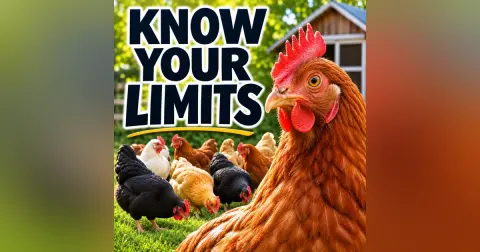
Chicken math is real! But how do you know when your enthusiasm for adding more chickens is exceeding your ability to care for them?
Join Rip Stalvey, Mandelyn Royal, and John Gunterman as they share personal experiences and practical strategies for keeping chicken math under control while building a successful, sustainable flock.
Whether you're hatching your own chicks, purchasing them from a hatchery, or visiting your local farm store, a little advance planning can make all the difference.
In this episode, you'll discover:
· How to establish realistic flock limits.
· Why being selective about hatching eggs matters.
· How to prepare for unexpectedly successful hatches.
· How to manage brooder and grow-out space.
· Why separating young males and females can be beneficial.
· How to avoid mistakes when evaluating growing birds.
· Why incubator capacity should match your available resources.
· How experienced poultry breeders manage chicken math.
The goal isn't simply to raise more chickens. It's to become a better poultry keeper while continuing to enjoy your birds.
CHAPTERS
00:00 – Introduction: Spring Fever Is Real
01:20 – Confessions of a Chicken Math Enthusiast
03:16 – Managing Multiple Hatches
05:40 – Selecting Better Hatching Eggs
07:52 – Breeding With a Purpose
08:47 – What Is Chicken Math?
09:47 – Planning Ahead and Managing Overcrowding
11:58 – Making Room for Your Growing Flock
12:47 – Preparing for Unexpected Hatching Losses
15:29 – Resisting the Temptation to Buy More Chicks
17:13 – Preparing a Safe Brooder
18:37 – Planning Beyond the Brooder
20:40 – Evaluating Birds of Different Ages
24:01 – Lessons From Experienced Poultry Keepers
28:17 – Matching Incubator Capacity to Breeding Goals
30:23 – The Rewards of Successful Poultry Breeding
32:03 – Final Words of Wisdom
33:03 – Closing Thoughts
JOIN THE CONVERSATION
Has chicken math ever gotten the better of you? What did you learn from the experience? Share your story in the comments.
If you found this episode helpful, give us a thumbs-up, subscribe to Poultry Keepers 360, and share it with a fellow poultry keeper.
Subscribe to our YouTube channel:
https://www.youtube.com/@poultrykeepers360
Poultry Keepers 360
Helping Poultry Keepers Make Better Decisions.
Join our Facebook Groups:
Poultry Keepers 360 - - https://www.facebook.com/groups/354973752688125
Poultry Breeders Nutrition - https://www.facebook.com/groups/4908798409211973
Welcome to the Poultry Keepers Podcast. John and Mandelin and I are with you today, and we're gonna have a really good show. We're gonna be talking about spring fever and how it applies to chickens. So spring brings fresh energy, blooming gardens, and for many of us, that irresistible urge to add new chicks to the flock. Now, whether you're hatching your own or scrolling hatchery websites, today's episode is all about channeling that spring excitement into smart, sustainable poultry planting. We'll help you balance that spring fever with flock success. So you can enjoy the spring season without getting in over your head, at least hopefully. So let's take it away, guys. Let's start with this. Lost a little place. Sorry about that. Let's start with this. Hatching your own chicks. What are some of the advantages, like control over genetics, breathing goals, and satisfaction of watching chicks hatch? What do you think advantage of from hatching your own birds, Madeline?
SPEAKER_01Sorry, I have to start that with a laugh because I've been struggling with spring fever when it comes to chickens and chicks since 1989.
Rip StalveyIt is very real.
SPEAKER_01Oh boy. Early on, I could not walk into any setup that had birds and resist it. So very quickly, I found myself with this flock of incredible diversity. Two or three of everything. And when I was focusing on bannems, it like my parents asked me to count. Keep in mind this is like an urban area. And I was supposed to have about 20. And when my parents asked me to count, it came up at 53.
Rip StalveyI think that's something we all go through and share at least. Yeah, at least
SPEAKER_02I
SPEAKER_01about had a 20-bird flock if they were standard size, but they weren't, so I flexed that number up.
SPEAKER_02So you're a
SPEAKER_01little bit more.
SPEAKER_02But that
SPEAKER_01excitement level, just hearing that noise of the little peepers. I don't know what compulsion that is, but I have gotten control over myself over the years.
SPEAKER_02It's what we've just seen. And now
SPEAKER_01my rule is I have to hatch it. And then I slapped some breeding rules on there that if you're gonna do this, you're not hatching all willy-nilly. Oh ma'am, you're gonna hatch like you mean it, and you're gonna take it seriously because that's what's gonna keep you in check. So that's my over the last couple decades, that's been my mantra of I have to do the whole thing and I have to do it correctly. Keep myself within responsible parameters. Well,
SPEAKER_02I've experienced the pain of managing multiple concurrent and successive hatches as well. And the it's better to have a couple of big ones than a whole lot of small ones, for instance.
SPEAKER_01Now, some people like to hatch ongoing throughout the season, and other people like to hatch just a little early, and that's it for the year. And I have so much respect for the people who can hatch one time and be done for the year.
SPEAKER_02I I'm trying to adopt that model, just managing feed, because I do grind and mix my own feed as needed, and mixing up three or four, or now even five, different formulas every two or three weeks because we have quail, we have large fowl, Chanticlair, and allegedly there's some bourbon red turkeys coming soon. And each one of those has different stages of life and different feed requirements for different stages of life, and trying to manage those effectively can get overwhelming.
SPEAKER_01But it's a relief when you reach the end of it.
SPEAKER_02Oh, yes.
Rip StalveyWhen
SPEAKER_02you're all on your adult ration and you're only got two or now three, because the turkeys. Although I'm gonna do some double duty with turkey and quail. Jeff showed me how.
Rip StalveyTo me, not only is that challenge, okay, but there's when you're hatching your own, you have to be worrying about fertility rates. How good is your incubation skills? It takes a little trial and error to get to where you can hatch good numbers of chicks, and then you gotta worry about do you have the equipment, space, and time? Because it is so easy to just take every egg that's laid, stick it in the incubator, and then suddenly you realize, hey, I got space for 50 chickens and I got 120 hatched.
SPEAKER_02Whoops. Yeah,
Rip Stalveybig whoops.
SPEAKER_02You look at your pen size, and then behind that, you look at your rearing pens and then your brooders, and I don't ever shoot for maximum capacity. Because I think filtering it.
SPEAKER_01It's helpful if you go into it with standards, even starting at the hatching egg, and look at shell quality, look at shape, look at size. Because instead of setting all of them, how about you go through and grade them instead and make sure what you're putting in that incubator is worth hatching to cut off some of that extra afterhatch
SPEAKER_02of chicks that
SPEAKER_01are sized or chicks that didn't hatch that well because the egg shape wasn't quite right. You can do yourself a lot of favors by just being picky on what you actually put in that incubator.
Rip StalveyAnd we've been talking about that for so many episodes, and I am really happy to see it. I'm getting contacted by a lot of folks, that they are starting to pay attention to the hatching eggs they set.
SPEAKER_02Yeah,
Rip Stalveyand that it makes me feel good that folks are saying, hey, I think what they're saying has some merit to it.
SPEAKER_02Yeah, I've been getting a lot of questions, people sending me pictures showing high porosity problems, going, hey, what can be causing like maybe not enough calcium? Or if it's across your flock, not enough calcium. If it's just one bird, don't set those eggs. Let's just let it end there.
SPEAKER_01Not every layer was born to be a breeder.
SPEAKER_02No,
Rip Stalveyamen to that.
SPEAKER_01Most of them are breakfast egg makers. If you actually get into the little details of who you should be hatching from and why, most of them should just be on breakfast duty.
SPEAKER_02If you stick to the plan that you set your first year and then revised your second and third, hopefully you're getting things under control and you have your toll gates. You have your I'm not setting eggs under this size or over this size or from hands under this age or over this age. There is no over, actually. By the time they've been around three or four years, you definitely want their eggs because they've proven themselves. Because you don't carry slouches.
SPEAKER_01Correct.
Rip StalveyAnd if you're hatching your own chicks, folks, I really hope you're doing it with an eye to improving the breed or preserving the breed or to building a sustainable flock. That's what it's all about to me. If I'm breeding, I need to be doing it to improve the breed and not just increase my numbers. Whether I think whether the folks are gonna buy chicks somewhere from the big box store from a local breeder, or they're gonna hatch their own. The key takeaway to that is you need to be prepared to deal with them. You gotta have the space, the feeders, uh, the infrastructure to make it all work. And to equate this to the next point. And uh resisting chicken math.
SPEAKER_01That's hard, but it can be good.
Rip StalveyOh, it's a killer. And let's define that when we start. What is chicken math? I like to equate it to go into the store and say, Oh, I'm just gonna buy six pullers. Oh, wait, now I have 23. And it can happen just that quick.
SPEAKER_01But
Rip Stalveyyou get excited, and there's such a breed variety, and that old impulse buying situation, it's a struggle to keep it under control. Is it not meant?
SPEAKER_02But what happens if shipping losses aren't as high as you expect? Say I ordered 72 quail eggs and nine turkey eggs, and I expect a 50% loss just due to shipping. But
SPEAKER_01then, surprise, 90%.
SPEAKER_02all hatch or ninety percent hatch rate. And now I go, Oh no, now what do I
SPEAKER_01plan for that much? All these valves
SPEAKER_02to feed, and I don't have enough rooter space.
Rip StalveySo, guys, how do we help our listeners control that chicken math urge? I think for me, the thing I would say is make a plan for your flock before chick season even arrives, or at least before you go down to buy chicks.
SPEAKER_01But also, if you already did make that commitment, you need to be quick and fast on staying ahead of those problems that arise from chicken math after the fact. If you because this is what happens. Let's say your brooder will hold 20 chicks for three weeks and you accidentally put 30 in there. That means you are already on borrowed time and you're already setting yourself up for failure. Because if they get too crowded, you're gonna have problems. If that brooder gets too gross, you're gonna have problems. So if you know you have too many, get in there and clean every single day because you want to avoid the problems that come from crowding. You need to be thinking about and immediately implementing a plan to get them into better space, keep their air quality good, keep everything clean before you're seeing the ramifications of the impulse.
Rip StalveyAnd and already
SPEAKER_01too late, get in there, get your hands dirty, and fix it.
Rip StalveyAnd you gotta plan not just for the immediate, but those chicks are gonna be growing constantly, they're gonna be getting bigger, there's gonna be
SPEAKER_01dropping
Rip Stalveyeverywhere when they molt, and you gotta be prepared to deal with all of those. You don't want any of that to surprise you because when you get surprised, you're already starting out behind the eight ball.
SPEAKER_01And that's never a good thing. Is your coop
SPEAKER_02and your run? How many birds can you support? What do you need to cull down to in the fall to carry through the winter?
SPEAKER_01One thing I'll do to accommodate chicken math is once I start seeing my trajectory of where everybody's headed and how many I'm gonna have, I will absolutely go back into my adult pens and go, who among you do I really need to be keeping? Do I have any that aren't laying as expected? Do I have any that are slacking off? Do I have any who aren't gonna be quite as good as what I have of the coming? And I'll start thinning preemptively and then consolidating and freeing up space that way. And then also, since I have adult purpose block and we do eat chicken, then I'll start looking at who's ready to go into the freezer to free up space that way as well.
Rip StalveySo it's a preemptive strike type situation for you.
SPEAKER_01Once my chicken mask starts kicking in, I start taking a look around, then I start looking at all right, I can fit in here, I can space these out this way, I can adjust for fire in case my hatch rate was way better than I thought it was gonna be. Which varies. Like even just yesterday, we had some really severe weather come through, and we had a power outage right when I had egg hatching, and our generator is primarily focused on freezer because we can't lose the food we've already put up.
Rip StalveyNo,
SPEAKER_01and our generator is suitable for our household, but not the barn. So what I did was make sure I did not open any doors, I didn't change anything, they just had to ride it out the way it was. And when I got in there the morning after the storms, everyone who hatched already was perfect. Everyone who was pit, they were shrink wrapped because the airflow stopped. And the temperature got down to 84 degrees in that hatcher before power came back on and it got up where it needed to be. Everything that had not hatched or pit, they did not. So it ended up being like a 50% loss of what should have hatched. But everyone who got out, they were just fine. And then I adjusted for fire with the results in front of me, and I got everybody where they needed to be, and then decided maybe now we need to consider battery backup or something for that hatch room. If these storms are going to keep increasing in frequency and intensity the way they have been, because a 50% loss from your plan that hurt. This was intentional hatching. This was not chicken math of oh, collect them all. No, this was I needed those birds, and now they're not here.
SPEAKER_02Last winter I had three consecutive weeks where we had power failures a week into incubation that lasted three days each. So scrap all them, start over, had another power hit. We're out for three days, start all over, had another power hit. So that put me behind a month.
SPEAKER_01Yeah, I feel behind now of my intentional chicken math. I'm behind
SPEAKER_02this year. We've got the Yeti Goal Zero solar generator and battery backup system, and our power has only flickered twice.
Rip StalveyAnd
SPEAKER_02go figure,
Rip Stalveyyou know, it's almost like everywhere we go this time of year, we see temptation in the form of go to the feed store for a bag of feed that chicks in chick tubs, just people. Well, if
SPEAKER_01they're there in the main drive aisle of retail, and I know a little bit about retail, they're also banking on you getting the waterer, the drinker, the bag of feed, the grit.
Rip StalveyYeah,
SPEAKER_01that whole thing is where all their the feed stores don't even really make money off those chicks.
SPEAKER_02No, they lose money. They
SPEAKER_01make their money off of everything you need for those chicks.
Rip StalveyAnd not only is the feed store doing us in, it just get online, get on Facebook, and what do you see? Host of those cute little adorable fluffy butts everywhere.
SPEAKER_02And
Rip Stalveywe're constantly
SPEAKER_02television
Rip Stalveybombarded with attention grabbers.
SPEAKER_01Don't fall for it, especially if you cannot have a male bird where you live. If you live somewhere where you're only allowed to have pullets, stay away from straight run, stay away from it. Could be a boy. Just do yourself a favor and wait and be patient for what you really need to have in your flock. If you have to have a limited flock, be careful, be patient. Otherwise you're gonna have five current boys in the middle of the city.
Rip StalveyAnd I can't think of any better advice than that.
SPEAKER_01You're probably not gonna want to eat those boys either. And then what do you do with them?
Rip StalveyExactly, exactly. What about what should we do in advance of getting chicks? What what's our sort of spring fever planning routine?
SPEAKER_01Setting up the brooder and make sure it holds the right temperature, not cooking them on the first day because you put a 250-watt bulb on them a foot and a half from the floor level, and then now they're too hot everywhere because you used a plastic tote and a bulb that was made for a barn.
SPEAKER_02Okay. First off, get plate heaters or sweeter heaters are even better. Yeah, you should we should know these things by now, people.
SPEAKER_01We should, but if you're impulse buying, chances are high that you're gonna have to set up a brooder in a hurry.
SPEAKER_02Yeah, here's the reflective dish and a 250-watt red plastic coated bulb and a spring clamp.
SPEAKER_01I get scared
SPEAKER_02when I see these starter kits at the store, honestly, because we've all seen the pictures and heard the stories of the coop fires and the brooder fires, and it does get scary. Follow the good advice out there.
SPEAKER_01Hopefully, most people are going into stuff with a plan.
SPEAKER_02Hopefully,
SPEAKER_01crossed.
Rip StalveyYeah. One I'm gonna just throw this out there. And one of the things we've done is we focus primarily on baby chick, but you need to plan ahead because those chicks are gonna grow up. So, what are you gonna do? How much pen space are you gonna have to add to accommodate them? What are you gonna do with all the extra males if you got straight run? Because those are real problems that you have to contend with. Can you get the appropriate the age appropriate feed that you need? All of those are things that you got to plan for.
SPEAKER_02And pen space can become a premium, especially if you have birds that haven't been particularly selected for temperament. Those juvenile males can get a bit rowdy, especially when they're in the company of males and females. The competitions can definitely get a little heated there. So having separate quarters for males versus females, probably a good idea. Try to have that
SPEAKER_01done by eight, ten weeks old, splitting for gender.
SPEAKER_02Oh, soon as you can tell them apart, split them. Absolutely. Because having males in with females will affect the females' growth rates in a negative fashion.
SPEAKER_01This is true because they feel like they have to be on the run. Because those boys are already getting after them as soon as they have that inclination,
Rip Stalveymakes a huge difference.
SPEAKER_02So you're allowing them the opportunity to express their maximum genetic potential by separating the genders. And yeah, it should be an easy decision, especially when you're looking at the birds. Now you're just looking at just hens in a pen or in the yard and just roosters in a pen or in a yard. And you can very easily spot those differences and go, yes, you, no, yes, no, yes. And walk around with a can of spray paint or however you mark your birds at the end of the season.
SPEAKER_01That's a lot easier if everyone in that group is the same age. Because I know it's tempting to merge your groups together. But if you do that, you need to have them all labeled somehow so that you know how old they are specifically. Because if you walk into a pen and you have an age spread a month, two months, three months, you're not gonna judge them equally or the same unless you know exactly who's who, and you know exactly when that flock grows and how they grow to make an accurate assessment.
SPEAKER_02So if you're a little OCD about data collection and may you weasure, you know, wing band everything, weigh all your chicks every day for the first three weeks and then monthly till harvest, you have an expected growth rate chart. So anybody who's meeting or exceeding that, you have different options for them. And you can really start sorting out early, like at the end of three weeks, I can already pretty much sort down to 50% of my hatch what I might want to sell and what I might want to keep if I were heading that direction.
Rip StalveyAnd Madeline, you brought up a really good point that I want to just reiterate for just a minute. Minute because when you have mixed age groups that you're evaluating at one time, it's so easy to get caught up. Let's say you've got birds that are three weeks apart in age, and you pick up a bird and say, Oh, this is a nice bird, so you put him in your keeper pen, and you pick up another bird. This is he's just not as good as that other bird. His bone structure is not as heavy as I would like to see. There's not enough body capacity as I would like to see. And we get so caught up in the moment we forget to say, hey, this bird is also three weeks younger than the other bird.
SPEAKER_01Yeah, did you just automatically accidentally sort them by edge? Your favorites were three weeks younger and your favorites were three weeks older. I
Rip StalveyRight.
SPEAKER_02I check the wing band and the leg band and my patch log and go, okay, you are 14 weeks old. You weigh this much and you feel like this. I know what a 14-week and a 16 and an 18-week bird feel like, more or less, at this point, because I've been handling this breed so often. And Mandelyn, you have that level of intimacy with your flock as well. And you just know what they should feel like at a certain age. But it's so easy to get confused by that, especially if you have multiple successive hatches. After six weeks old now,
SPEAKER_01I'm really not weighing that often. It's all by feel. I know the haft I'm looking for. I know once it's burned into your hands, you can fly through birds, but you do need to take that time to weigh them and learn that hand feel for that bloodline. And then if you add genetics from elsewhere, you have to start all over again on what those should feel like when.
Rip StalveyAbsolutely.
SPEAKER_01It's all a bunch of brain teasers, and I love it.
Rip StalveyJohn and Madeline, I've got something here I'm gonna spring on you guys. And I like to call it your story can shape your strategy. Okay. And what I mean by that, based on personal experience dealing with chicken math, and when it got out of hand, what did you do differently than next time? What did you what'd you take away from all that? Your big aha learning experience. Mandelin, I see the wheels are turning there.
SPEAKER_01Oh, they are.
SPEAKER_02I downsized my incubators and brooders. I had the big GQF brooders and sportsman incubators, and it was actually a downsize but a huge upgrade for me to go with the hatching time because they do work so much better, and they I do have some physical challenges, but it also forced me to downsize my hatches. If I know that I can handle 30 chicks up to the first week in this brooder, and then they've got to come out, and then I can handle 20 for the next week, and then I can only handle 10 for the next week. It really forced me to look at my numbers and say, what can I realistically, ethically, comfortably maintain, and not stuff everything and try to make squeeze every last little bit that I can out of every run in my incubator.
SPEAKER_01So once I made the choice of picking my breed and breeding them to the best of my ability, that's when I got really serious on the kind of chicken math I was employing. Because before that, I wasn't so worried about where I was going to put birds because I had enough friends who would take them. But these were all just backyard layers. As soon as I knew I had females, I'm like, okay, who needs some layers? And then all the friends put their hands up and say, Me, cool. But now that I'm from a completely different breeding angle to where I need the data that comes from what I'm hatching, I don't want to let go of day old chicks. So that means I need a brooder plan, a grow pen plan to see what I need to see over the weeks that I need to see that before I make any decisions. So my program's adapted and I limit myself at the incubator size. I cannot physically hatch more than 200 in a month. And that keeps me in line with my space after that.
Rip StalveyThe incubator can definitely help regulate your
SPEAKER_01too big of an incubator and you don't have the growth space, you're gonna be in a pickle quickly.
Rip StalveyAnd I'm like John, I had one of those big cabinet incubators. I had a Renzi, not a GQF. But you could put 360 eggs in that sucker. And I knew that if I kept that incubator with my back giving me problems and all that, yeah, I was asking for problems. So I bit the bullet and spent hatching time of more money than I'd like to, but I got an incubator that only would hold 120 eggs at one time. I could hatch 30 eggs every week. Okay, that was it. And I thought, I don't know if I can just stand looking at an incubator that much smaller. But surprisingly, the hatching time incubator is the same size as the Rensi. So at least visually, I've got that reassurance that I can do a lot. But knowing your limits is gonna be the toughest thing to overcome for you.
SPEAKER_01And then knowing where to place those limits.
Rip StalveyYes.
SPEAKER_01I still have my sportsman cabinets and I have the 1500 and the 1550 hatcher, so that I have to hatch separately. I knew I needed that rule to keep the incubation unit clean, hatch separately.
Rip StalveyIt makes a big difference
SPEAKER_01with the egg sizes of my breed. I can't hit that advertised capacity of the Sportsman 1500 cabinet because half of my trays are for way bigger eggs than the advertised. So I have to use two different egg tray sizes, and that limits me. And then I love a staggered hatch to where I can collect for a week, put those in, collect for a week, put those in. So I have three shelves in rotation, and once they I candle at day seven, everything good moves to the next shelf. Candle at day 14, everything good moves to the next shelf, and then from that top shelf, they move to the hatcher. And in my hatcher, I have baskets which take up a lot of space, but now I get to organize them by the pen that came from, and I can check the pen performance through those baskets and know exactly which male has superior fertility, which pen has the most consistent chick size, and I can compare that to the setting size of the eggs that went in. That space level lets me see a lot more data through the entire process. So downsizing, I think, would be a disservice for me, even though it'd keep me in better check. But upsizing, I don't have the pen space, so I don't have any plans to really change anything unless I also change the entire grow out chain. If I get a bigger incubator, I better have a second barn.
Rip StalveyThat's my high that I get in poultry.
SPEAKER_01Paul, when that next generation pans out exactly the way you planned it at a higher percentage than you've ever seen it. Oh, that's where you see the magic of it. Oh did that.
Rip StalveyYes. Success.
SPEAKER_02No crooked toes.
SPEAKER_01Whoops, do it again.
SPEAKER_02Single crooked toe out of sixty eggs set. Yes.
SPEAKER_01Oh, yeah. When you reach those milestone goals, yes.
Rip StalveyI I gotta be honest with you, this recording has just flown by. We've covered a lot of territory, and I hope we've answered a lot of folks' questions, or at least dangled a red flag in front of them for when they go to the
SPEAKER_01or brought up questions they didn't even know they had.
Rip StalveyThat's right. That's right. But I think to sum it up before we go, spring chick season can be one of the most joyful parts of poultry keeping. It can also be one of the most frustrating if we don't plan ahead. If you have questions, do you have problems? Drop us a line at Poultry Keeperspodcast.com. We'll be happy to answer that.
SPEAKER_02Definitely.
Rip StalveyAnd if you've got a chick season story about how chicken math affected you one positively or negatively, we'd love to hear about it. So drop us a note in the in an email. I'd even use it on the air sometimes. You never know about us.
SPEAKER_01Or maybe it could be a topic in our podcast group on Facebook and we could have a whole thread of everyone's chicken math stories.
Rip StalveyBut hey, before we go, Madeline, do you have anything else? Any other words of wisdom you want to share with our listeners?
SPEAKER_01If you need to have a support buddy, go to the farm store with you to make sure you don't buy anything. Please take that person with you.
Rip StalveyGood point.
SPEAKER_02Have spare ceramic discs for your humidifier for your incubator. Or a spare humidifier for your incubator and a spare heating element. You never know.
SPEAKER_01Spare parts that you bought in fall before they sold out for spring. Because right now it's like lawnmower season. Our grass cutting has to start this week. So, what are all the mower supply places doing right now? They are actively selling out on the most common things, and you're gonna hit May needing blades, and no one has them. Same thing applies for your poultry stuff. Go into the season. Just like
SPEAKER_02headlights
SPEAKER_01you might need on hand.
Rip StalveyWe appreciate our listeners. We thank the world of you. We hope you enjoy what we do and the effort we put into it. So until next time, next week, as a matter of fact, keep enjoying your birds, keep watching them, and take your buddy to the farm store the next time you go so you don't buy chicks. No, I kid it. Y'all have a good day, folks.