


 Apple Podcasts

 Spotify

 Youtube Music
 RSS Feed
Did You Choose the Right Breed—but the Wrong Birds? – Audio Edition
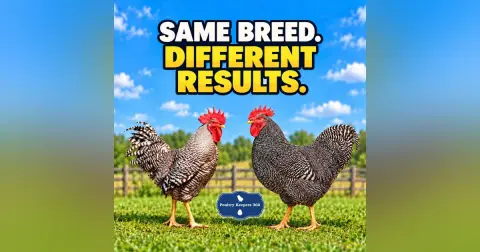
Did you choose the right breed—but still end up with birds that don’t meet your needs? Two flocks can carry the same breed name and give their keepers very different results. What might you have overlooked?
Frank Reese joins the Poultry Keepers 360 team to discuss choosing standardbred poultry for eggs, meat, and preservation. Drawing on his experience breeding chickens and turkeys, Frank explains why the breeder and the particular line deserve as much attention as the breed name.
We discuss New Hampshires, Barred Plymouth Rocks, Delawares, and other traditional breeds, along with the questions to ask before bringing birds home. The conversation also covers selecting future breeders, learning from experienced poultry keepers, and working with others to maintain a line.
In this episode:
• Heritage poultry and the importance of breed standards.
• Setting a clear purpose for your flock.
• Matching a breeding line to your egg and meat goals.
• The difference between hatching chicks and selecting breeders.
• Finding a breeder and learning the strengths and weaknesses of a line.
• Considering costs and a market before expanding.
• Preserving useful qualities for future generations.
This Audio Edition is adapted from a previously recorded PK360 LIVE conversation. Production figures and examples reflect Frank’s experience with particular lines and management conditions; they are not guarantees for every flock.
RECOMMENDED NEXT EPISODE
Linebreeding Chickens: Build Consistency Without Losing Vigor – Audio Edition
https://youtu.be/ajtT02BbTWY
Continue with a closer look at breeding for consistency while maintaining vigor.
CHAPTERS
00:00 Why choosing the right breed isn’t enough
00:30 Frank Reese: learning from lifelong breeders
02:28 Heritage poultry and breed standards
05:58 Decide what your flock needs to do
11:48 Choosing birds for eggs and meat
15:48 New Hampshires and Delawares for the table
17:27 Hatching chicks versus selecting breeders
19:20 Why the breeding line matters
20:40 Finding a breeder and maintaining a line
30:48 Growth expectations and good management
31:18 Study the breed and its standard
33:19 Jersey Giants and the family table
34:00 Frank’s advice for getting started
36:00 Preserving poultry for future generations
36:39 Takeaways and your next episode
JOIN THE CONVERSATION
What do you want your flock to provide: eggs, meat, preservation, or a combination? What would you ask a breeder before choosing your next birds?
Poultry Keepers 360
Helping Poultry Keepers Make Better Decisions.
#HeritageChickens #PoultryBreeding #PoultryKeepers360
Join our Facebook Groups:
Poultry Keepers 360 - - https://www.facebook.com/groups/354973752688125
Poultry Breeders Nutrition - https://www.facebook.com/groups/4908798409211973
You can choose the right breed and still start with birds that don't do what you need. The missing piece may be what that particular line was bred to do. Welcome to Poultry Keepers 360. In this audio edition, Frank Reese joins us to discuss choosing standard bred poultry, finding a breeder, and selecting birds that can serve your flocks for generations. Whether your goal is eggs, meat, or preservation, it starts with knowing what you want and what your birds can deliver.
Frank ReeseYou know, I was born into this, and I mean, grandparents and great grandparents already had poultry. It was just part of living on a farm. We had cattle, hogs, everything. And everybody, all the kids, all of us were in 4-H and everything. And I was one of the younger kids, so I got sent to the barn and uh to take care of the chickens. And so I proceeded to tell my dad, I said, I'll show him. So that was my first exposure, but of trying to improve and get better and better birds. And of course, joined the American Poultry Association very young. And but then also the important part is I began to meet back then, you know, every little town in the in the country had a hatchery and were being supplied eggs by breeders. So I began to meet as many of the of the breeders that I could. And that's where I began to learn what it took to improve poultry and to maintain. And back then, because you know, it was just a different world. I mean, if you wanted new hamps, you knew who had the best. If you wanted Bard Rocks, you knew who had the best. If you wanted Jersey Giants, you knew where to go. Because back then there was people that dedicated their lives to those particular breeds and varieties. And not only did those chickens or turkeys or whatever run at the shows, more importantly, they also won at the market. They were still good egg layers, they were still decent meat producers, and just like every other animal on the farm, they had to work to survive. The animals had to provide an income to the farm.
Carey BlackmonSo, with that, what makes a breed heritage or standard? You know, when you said that you refer to it as standard, that's the way I've always been told to refer to them as well, because it's standard bread, not a lot of people want to use the marketing term heritage, but it's standard poultry.
SpeakerYeah, and that's what it is. You know, the the the bad thing about using the word heritage is that has no backing, has nothing behind it, no organization or history that's that can come in and label that as a as a heritage. I was at the meeting 15 years ago or 20 years ago, whatever, because I've also been a member of the Livestock Conservancy almost since its founding. And we had a meeting in Virginia Tech pertaining to turkeys. It was all about turkeys, and that's my main thing, and always has been. That's why they brought me in. And they were calling, they started calling them heritage turkeys, and I begged them for two days not to do that, but they did it anyway, so it became a huge marketing thing. But with the help now of the livestock conservancy, you know, we have actually we have written definitions of what a heritage is. And to call a chicken or a turkey heritage, it must be a known breed that existed prior to 1950 and has been recognized by the American Poultry Association as a purebred chicken. So that cuts out a lot of these more modern things that have come about. So heritage should be something that is from out of the standards, out of the APA, which has the ability and the past history to identify certain breeds and varieties, but also comes with a standard weight and size and shape and conformation and and utility and everything. So when I proceeded to start selling my turkeys, it was, you know, I wanted a USCA label that stated, you know, that this was a bronze or an aroundcet or a bourbon red or whatever turkey. So it took me almost a couple of years and some lawyers working, but I was now my turkeys are labeled certified standard bread. So I was able to get it past the USDA. So now the USDA and the government has actually accepted our definition of what you we would call heritage. So if someone's going to market them as heritage and get a label from the USDA that identifies the meat in the package as heritage, the USDA has accepted our definition.
Speaker 2That's awesome.
SpeakerI always tell people it all depends on what it is you want the bird to do. Do you want it to feed you and your family? Do you want it to feed you and a few neighbors? Do you want the bird to produce enough meat or eggs to pay for its own feed? And are they just pets? You know, it's sort of like you keep a dog and you spend all this money on the dog because you love the dog and you just want the dog. So, you know, you have to decide ahead of time what it is you want the bird to do. I've always told people if you want to do it and and not go broke, you have two choices. You stay very small, and you raise the chickens or the turkeys that you want, you dress them yourself, and in most states, at least I know here in Kansas or in most states that I know of, you can hand dress them and sell them directly to friends and neighbors. And the majority of the cost of marketing poultry for meat is the feeds course, number one, and then number two is processing. Because if you got just a hundred chickens and you're gonna have them process, and if you pay ten dollars a bird to have them process and packaged and inspected, you're already in the hole. So unless you can get people to pay you a fortune for those birds. Now, what I've always done all these years is especially with chickens, because chickens are far more difficult than turkeys to market as uh as meat birds. If you get a really good dual production breed, a breed of chicken that is capable of laying 180, 200 eggs a year, and you gather those eggs, you hatch them yourself. You don't go out and buy the chicks, but you hatch them yourself, and you raise them and feed them and you process them yourself. The eggs you sell should pretty well pay for all the feed, and your profit's gonna be off your dress birds, but you have to pick a breed or variety of standardbred chicken that can meet that demand, and you've got to you've got to get your hands on quality heritage chickens that will meet that requirement. Some of the hatcheries that are around today are beginning to realize that more and more people are wanting better and better quality when it comes to their dual production. I know the dress weight and the standard weight of New Hampshire, of Delaware's, of Barred Rocks, of Buff Orphington's, of Rhode Island Whites, of the Cornish Game, these are all varieties that we have raised in great numbers for a number of years. And I've done all the breeding and selecting and improving in the birds, and so you've got to know exactly what they're capable of. So you gotta, you know, if you if you can't get your hands on some type of quality standard bread chickens, if you're going to try to breed and improve them yourself, you can do that, but you better plan on at least a good five to ten years of breeding and selecting to get to where you probably want to go. And I always tell people, you you know, we'll start with barred rocks. You can buy barred rocks from 10 different places, and they will all be different. And so, whatever you get, a Rhode Island Red, a New Hamp, a barred rock, whatever, it is no better than the breeder behind it. When people tell you barred rocks will do this and this and this, that's not true. Those barred rocks are no better than what the breeder behind them selected that particular variety to do. If they selected for pure egg production, you're probably gonna get a skinny barred rock. If they selected for heavy meat production, you're probably gonna have really poor egg production. You've got, you know, you you've got to know whatever it is you choose. You've you've got to go to that source that you got your birds from and ask them what they were selected for, what they were capable for.
Speaker 2That makes sense. Um what so let's say somebody was gonna start and they wanted to pick out a bird that that meets that. What are some standard breed birds that will consistently lay those two that 200 eggs per year? What are what are some of those that you would choose?
SpeakerNew hemp, they're excellent, and they have a dressed weight. If you get a really good old standard new hamp, they'll be ready to process in 12, 14 weeks. They'll dress out three and a half, four pounds, and those hens will lay 180 to 100 eggs a year if you manage them well. Bard rocks, they'll do the same thing, but their growth rate is more like 15, 16 weeks before they get to what we consider marketable weight. You've got it. The reason why weight is important is that whatever breed of chicken you have, you have the most money you invest in that chicken is going to be in the first five weeks. The incubation, the hatching, and the feed and so on to get them started. That last half of their life, especially the last three or four weeks of their life, they're really putting on the muscle mass and so on. So you gotta know at what point. Now, if you don't have quality bard rocks or quality new hamps, and you kill them in 16 weeks, they may only weigh two and a half pounds. Right. Because they haven't been selected for that standard weight. Another one's the Delaware. There's some excellent Delawares. There's a few breeders that are doing very well with buckeyes. The wine dots, some of the wine dots, or there's some excellent wine dots out there. You just have to traditionally, historically, if you go back and look at what was being raised through the 20s and 30s and 40s and up until in the 50s, and all this disappeared. By the 1940s, they slowly got replaced by the new hamps. And the new hamps started taking over, and the barred rocks started losing ground very quickly. And by the 1960s, they were all gone. So, but these were chickens that were being raised on multiple farms, not in big buildings, but multiple farms, and have a history of doing very well at doing dual, what we would I would call dual production. Now, there's some varieties like the Jersey Black Giant that was developed, that is a fairly decent egg layer, maybe 160, 180 eggs a year, but they'll lay a really large egg. But they were never considered a good frying chicken. It's like the Brahma. The Brahmas used to be raised, the light Brahmas used to be raised in large numbers for the market. But the Brahmas and the giants were raised for a roasting market and to be killed at 20, 24 weeks and to dress out five, five and a half, six pounds. So you have to decide what what is your market, where do you want to sell them, and how you're going to dress them. And that'll determine somewhat on what breeds you pick.
Speaker 2So let's say that I wanted a bird that was a good general purpose bird that I could fry or that I could grill, but would also give me a good number of eggs. Well, what would you recommend someone to go with?
SpeakerIf they're gonna fry them or broil them. Okay, so you're talking spring chickens, you're talking dressing about three, three and a half pounds. But if you want something that's somewhat competitive, not too far off from what they're probably used to seeing at their local grocery store, probably the new hamp is going to be your best. And I worked really hard to develop a really good line of Delaware that's very first. What is a Delaware? A Delaware chicken is developed by crossing barred rocks and new hamps. That's how you get a Delaware. But if you cross Delawares, you can breed Delaware, Delaware, and keep getting that Columbia pattern. That's what it is. It's a Columbia pattern with barring in the black. So, but the reason we did is we have a lot of people wanted a white feathered bird. It's a little easier for them to clean and to dress than a dark-feathered bird. So the Delaware, I think, is done pretty well. But the thing about it is you're gonna have to develop them yourself, and you're gonna have to learn how to maintain them.
Speaker 2Gotcha.
SpeakerAnd we have lots and lots of growers in this country who have very few breeders, very few people that are breeding quality birds.
Speaker 2That that is an that is such a true statement. There's a lot of people that will hatch out birds and hatch out birds, and they don't even know what coaling is or what to look for.
SpeakerOf course, I I'm talking more turkeys, but how do you walk into a flock of 5,000 barred rocks or 5,000 bronze turkeys and pick out the top three? And why? What is it you're looking for? So, you know, like when we get ready this fall to do our 8,000 turkeys for Thanksgiving, it'll be my job to pick out the top 100 toms because I know that those toms that I pick will determine next year and the next year and the next year the quality of my turkeys. And I gotta pick out, you know, a thousand hens also. So you gotta know what you're doing. Uh when you walk into a flock of barred rocks or Delawares or new hemp, which ones do you send to market and which ones you keep? And so then you've got to decide, you know, when you ask that question, which I appreciate, you know, if I wanted 800 eggs a year, what breed would I suggest? To me, it's more than just saying new hamps, it's saying whose new hands, what line of new hamps are you getting?
Speaker 2That was actually gonna be my next question.
SpeakerI say, whose do you have? Because that will tell me real fast if they've got a mess or if they need to start over or whatever, because some of these varieties and lines that are being sold that are out there, mercy, 10 years you couldn't improve them. Because a lot of them have Legard blood in them, you know. The the industry has crossed them over and put barred feathers on a little chicken that's built like a legro and they call it a barred rock because it's got barred feathers, right?
Speaker 2And they want that egg laying capacity that the legerns have.
Jeff MattocksSo, Frank, where does somebody egg layers? But you know, you can't feed a barred rock chicken for 16 weeks and have it dress out at two pounds and go anywhere. You know, you're gonna go in the hole. I mean, you could eat it, but you'll have a heck of a time selling it. You can eat anything, you can eat a 10-year-old rooster, you just got to know how to cook it.
Speaker 2Right. So that brings me to two questions. Number one, where would somebody go? Let's say they they figured out what they want to do, and you recommend the new hamps. Where would I go to get the best new hamps to start my project for my homestead with?
SpeakerThat's such a hard question. Sometimes when people ask me, because I get those that question a lot. My first thing I'll ask them is is where do you live? and I can often find somebody close by, you know, because uh there are a few people that's still got good new hamps in Ohio, in Pennsylvania, in New Jersey, in Nebraska, down Texas. There's some decent ones back in California and Idaho. I, you know, is I always tell people try to buy from a local breeder if at all possible. Spend time talking to that breeder, find out what it is that they're doing, and what issues and problems they have with their particular line. I'm from the old school. I think a chicken that wins on the farm, wins of the market, should win in the show ring as well. That's the way I was taught. There shouldn't be any difference between a show chicken and a farm chicken. But some of that is getting, you know, I'm sure when I was a kid, a lot of the people, men and women who taught me, I'm sure I drove them crazy with 50 million questions, but that's how you learn. Um also if if you keep a small flock, you know, not I'll keep the amount of birds that I keep, but if you're keeping a small flock, then and and if you're new at what you're doing, don't go buying chickens from other people and bring them in. Go try if you find a line that you like, you know, like when I was a kid, Golden Miller had the blessed best Jersey black jersey giants in the nation. So every year, for as long as that woman was alive, I bought eggs from her and and hatched them. I never bought from anybody else. I was proud that the line of Jersey Giants I had were pure Goldemiller line, and I knew exactly what it was supposed to look like, what they were capable of doing. So, but a lot of people now that she's gone, I have to keep a really large number to be able to maintain the line. And so if you're going to get a line, you know, after you've done it for 10 or 15 years, and you really know your birds, and you know that breed, you know that confirmation, you know what they're capable of doing, you could go and get something outside of your line and bring them in, but just be really diligent and in and calling and getting rid of the birds that will not improve your flock. When I used to talk to Ed Ed Bus at Penn State, Dr. Ed Bus, he was the head geneticist at Penn State. When they would go to improve a line, this is back in the 40s and 50s, they would keep 40,000, 50,000. That's how many they felt they had to have to be able to improve a line. Now I've been able to do it with under 600. You know, like Bard Rock's between four and 600 hens, and I've been able to maintain and keep the line going and keep enough genetic diversity because there was no place for me to go get anything new. And so, I mean, mine are the old Ralph Stern bloodline that goes way back. Turkeys, you need to keep around 400, 500 hens. Now, if you're not capable of doing that, then what would be nice is if you can share your bloodline with two or three or four other people, and then you guys share eggs and or share chicks. Maybe you go to your friend every year or two, and he'll they'll let you take a rooster and bring a rooster in. But in when I was a kid, there there was many breeders of barbocks, there were many breeders of new hamps, there were many breeders of Delawares or Wine Dots or whatever. So we all basically had somewhat the same line and from the same background, and so we were able to share and share roosters or share eggs, and and that's how we were capable of keeping things going at that level. You're bringing the awareness to this. But if you don't do the work ahead of time, it's like I always tell people when they say they want to do what I do. I say, before you ever get a bird, before you ever build a chicken house, figure out what it is you want to do. Find, you know, if you want to sell meat, if you want to sell eggs, go find out what your market is, what that market's capable of handling. What can you get? You know, my friend back east, he can get twice as much for a dozen eggs as I can. My friend out in Idaho and California, they can get three times what I can get for a dozen eggs for eating eggs. So you have to determine that. And of course, I have a big advantage because I raise thousands instead of just, you know, 20 or 30. I can get my feed for probably a half half or a third of what you know. If you go and buy a feed in a bag at the feed store, you're paying a lot of money for a 50-pound bag of feed. Or if you've got to go and have your chickens processed at a small mom and pop processing plant, you're probably paying double what I pay to have chickens or turkeys processed. So have to figure out, you know, this the other thing is be, you know, not only find who's gonna buy your birds and where your markers are because what are your state laws and federal laws and regulations? And you know, do I need state inspections and federal inspections? What is my rules and regulations for state health inspectors and animal inspectors? And do I, you know, do I have to vaccinate or do I need to test my birds for plurum and typhoid? Do I need to test for MG? And you know, the list goes on and on. You know, I spend a lot of money every year just blood testing birds, and so thank goodness I've a really good vet, bless her heart. She's learned about turkey diseases, because it's not taught in vet schools much anymore. And so there's a lot to consider. But if you're just going to have a backyard, that's the sentence. If you're just going to raise some quality meat, meat that's better for you, because we've done all the research on that already. Doing the research on the difference between my barred rock meat and the new meat and the Cornish meat, and what you buy at the grocery store. You can avoid a lot of that. You can dress your own chickens and feed your family without all the inspections and everything else. But most people at least want something decent looking when they dress it out. To me, the most important thing in rape poultry is what I was taught from the beginning, and that is to raise a balanced animal. And a balanced animal means that reproduction, muscle development, and health and welfare are all in balance. That you don't select one characteristic over another. If you select for massive meat production, you'll have no egg production and you'll have no fertility. If you select for high egg production, if you select for a hand to lay 320 eggs a year, she'll burn out in two years and you'll have no muscle mass. And both of those extremes, the high egg production or high meat production, will affect the health and well-being of the animal. So it's very important to me that I still select for the well-being of the animal. And so that means you may get less eggs a year, or you may get, you may take you two months longer to get them to market weight, but that animal is capable of reproducing themselves, running, jumping, and flying. And you could take my chickens to any country in the world, they could reproduce themselves and feed that family without any intervention of man. So I don't know what they're capable of doing.
Speaker 1Yeah, I mean the New Hamp seems to be the winner or the Delaware, from what I've seen, because you can get you can get pretty close to a four-pound carcass on the on the cockrolls at 14 or 15 weeks.
SpeakerIf under good management do them at 12.
Speaker 1Yeah, under good management, good feed and all that, you can, you know, you don't have to wait forever on the new hamps or the Delawares. So yeah.
SpeakerBut those would be the ones that, you know, try to get you where you can. And if you like them, once you get them going, then make sure that you go back and get, you know, don't go crossing them up with everything. Not, you know, I encourage people to get a copy of the standards. I encourage people to join the APA. It's the oldest agricultural organization in America. Read up about if you choose the New Hampshire, if you choose the Delaware, or if you choose the Rhode Island White, that's another good breed. Learn about them, research them, and read the standards. Finding good Rhode Island whites is a little more difficult. Most of the ones, you know, because they're to be rose combed, and a lot of what I've seen coming out of hatcheries are single combs and about half the size they should be.
Speaker 1You don't really want one out of a hatchery.
SpeakerThey can do that too. You can search and go to the Rhode Island White Club and contact some of the people that are focusing on that breed. There's a Plymouth Rock Club, it's probably one of the oldest clubs in America. You know, but just make sure you have and and learn what they should look like, how they should be built, what should they weigh at 10 weeks, what should they weigh at 16 weeks, what should their breeding weight be? You know, a good Bard Rock rooster should weigh nine, nine and a half pounds, and she it doesn't, don't breed with them. So, you know, it's like a good Jersey giant rooster should weigh 12, 14 pounds. So you understand your breed and do the homework it takes to do that.
Speaker 1Yeah, the Jersey Giant takes too long to get there, though. You're not you're not gonna put meat on the table in a hurry with a Jersey giant.
SpeakerSo no, you won't. You'll be the best eat chicken you ever had.
Speaker 1Yeah, that's a true statement.
SpeakerThat's a true statement, but they were my mom's favorite.
Speaker 1Uh really okay.
SpeakerYep. She always liked them because they dressed out five and a half, six pounds. Mom didn't care much for fried chicken, she liked roast chicken, and she could get two young Jersey giant roosters in a big turkey roasting pan, and that was about you know 12 pounds of chicken. And she said that was the best eating you ever had.
Speaker 1Yep. Frank, we're at our time, you know, we're at our time for the show. Anyway, one last just give them give them the most important advice for starting the adventure you're on. What's the what's the best technique?
SpeakerDetermine what your goal is, what is it you want to do, and then pick a and then pick a breed that just delights you. You know, you just love watching it, and you'll put up with all kinds of things, you know. If that barred rock pattern speaks to you, or if that rhode island red pattern speaks to you, or when you look through the standard book and you're just blown away by the beauty of the of the light drahma, then become the best light brahma breeder that you can be become. And before you and and master that, spend time studying, talk to other breeders, talk to people that have been at it for a long time. You can learn so much by doing that. And try to buy from individual breeders if at all possible. So, but first of all, fall in love with the breed that you pair, and and and just and and also make sure you have a good clue of what you want that bird to do and what that bird is capable of doing. You know, if you just want a bunch of eggs, well then get whatever. You know, buy the catalog bard rocks and that have been selected for egg production, they're half the size, but they're not gonna be meat birds. No.
unknownNo.
SpeakerAnd I'm all about preservation, I'm all about saving genetic diversity. And so that's that was the main thing I have, you know, about 25 years ago, I began to realize all the people that I knew that I got turkeys from my whole life were all dying and disappearing, and along with them, all the birds. So I'm very proud that my bronze turkeys had been here on this farm in Kansas since 1917. And I'm working really hard to save them from extinction because once they're gone, they're gone forever. You can never bring them back.
Speaker 3Choosing a breed is just the beginning. As Frank reminded us, knowing the line, understanding what it was selected for, and choosing your readers with purpose all help determine your flock's future. That matters because preservation takes more than just hatching chicks, it takes keeping the qualities that make those birds useful and worth passing on. Now, to build on this conversation, we recommend you listen to Line Beating Chickens, build consistency without losing vigor. You'll find the link in the episode description. Our thanks to Frank Reese for sharing his experience, and thank you for joining us. This is Poultry Keepers 360, helping poultry keepers make better decisions.