


 Apple Podcasts

 Spotify

 Youtube Music
 RSS Feed
Raising Chicks? The First 14 Days Matter More Than You Think – Audio Edition
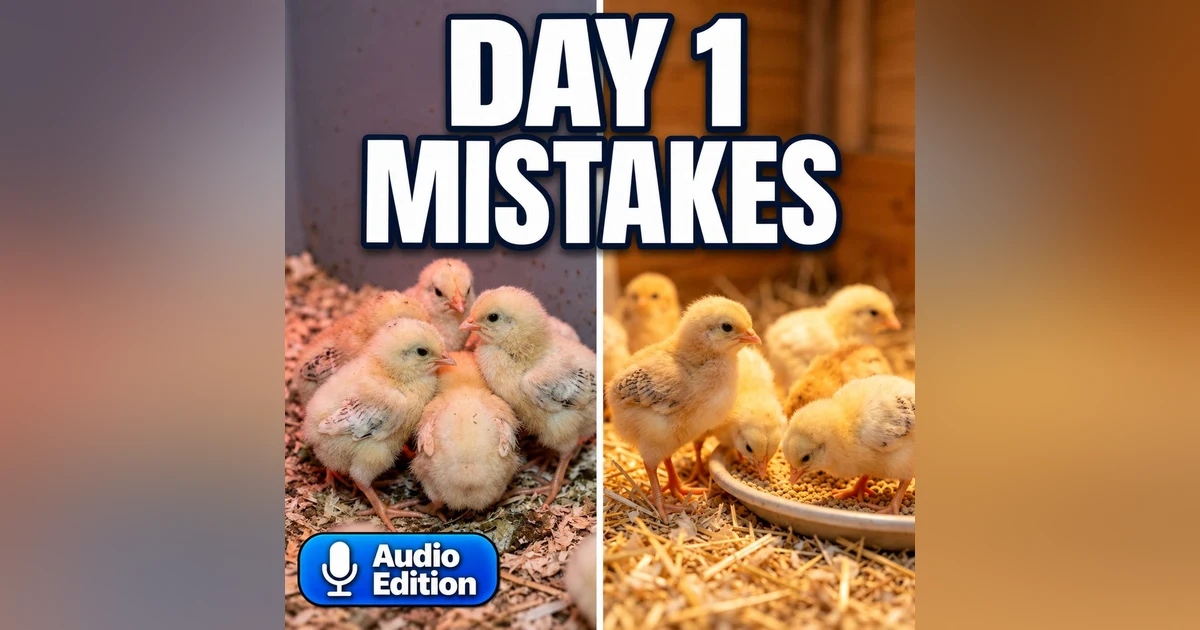

Your chicks have feed, water, and heat—but are they getting the start they need? The small details in their first 14 days can affect the birds you raise months later.
In this PK360 conversation, Rip Stalvey and our team’s livestock nutritionist, Jeff Mattocks, discuss the hands-on care that helps chicks get off to a strong start. Drawing on years of raising poultry and working with poultry keepers, they explain what to watch for, what to prepare, and how to tell whether your chicks are finding feed and water.
We cover early feeding, chick weights, crop fill, starter feed and particle size, brooder temperature, grit, and moving chicks from the incubator. The conversation also includes Jeff’s approach to feeding eggs, water additives, dust bathing, and the value of spending time observing your chicks.
Whether you raise heritage breeds, exhibition poultry, or a small backyard flock, this episode will help you pay closer attention to the details that are easy to overlook.
What is one thing you do to give your chicks a strong start? Share your experience in the comments.
This Audio Edition features a conversation from a previous PK360 LIVE video broadcast, edited and tightened for those who prefer to listen.
Poultry Keepers 360 — Helping Poultry Keepers Make Better Decisions.
#RaisingChicks #ChickCare #PoultryKeepers360
Chapters and timestamps
00:00 Give your chicks a strong start
00:38 Why the first 14 days matter
02:01 Weighing chicks and tracking growth
03:42 How soon should chicks get feed?
05:44 Help chicks find feed and water
06:53 Introducing grit and checking crop fill
08:33 Early care and genetic potential
13:04 Choosing chick starter and particle size
18:16 Early development and brooder temperature
22:39 Brooder space during the first three days
24:32 Immune development and introducing sod
27:42 Small chicks and hatching egg size
29:24 When to move chicks into the brooder
33:02 Bantam feed and feeding eggs
37:18 Water first or feed and water together?
38:23 Jeff’s approach to water additives
40:04 Water temperature and preparing the brooder
41:16 Feed particles and chick grit
42:24 Dust baths and handling chicks
45:52 Shipped chicks and Grow Gel
47:05 Honey and feeding eggs to older chicks
49:08 Does this approach apply to meat birds?
50:00 Grit size and brooder dust
51:42 Encouraging chicks to drink
Join our Facebook Groups:
Poultry Keepers 360 - - https://www.facebook.com/groups/354973752688125
Poultry Breeders Nutrition - https://www.facebook.com/groups/4908798409211973
So I know you're wondering what in the world you can do to ensure your chicks get that strong start they need. So Jeff Maddox is going to share with us exactly what we need to do to help them succeed. Jeff, take it off.
Jeff MattocksThanks, Rip. I'm not sure I'm going to share everything they need to know, but we're going to hit some high points of I think things that were often neglected. So, you know, look, folks, you need to understand that every infant, doesn't matter whether it's human or other, requires extra attention and the beginning of his life. So the chicks are actually no different than this. And I think a lot of people fail to understand actually what's happening in that first two weeks or that first 14 days. So, you know, as soon as that chick pops out, and we've got a couple of links for you that we're going to share. And I, you know, hopefully you'll go look at them, read them, things like that. But, you know, uh I'm referencing the Hubbard Breeder website as far as you know managing and rearing specialty chicks, premium chicks. You know, and Hubbard starts right out with premium chicks need special attention the first week of life because they're different that they have because of their different genetic characteristics. Okay. This is coming right out of large-scale, you know, breeder, breeder world data, right? They're telling people extra attention first week, right? First week of life is key to ensure future performance. Okay. And I and I I I want to reiterate that the first week of life is a key to ensure what that bird's going to turn out like, right? I see a lot of birds that don't get the right attention when they're, you know, day old in that first week, you know, they just kind of throw them in a pan, live or die, here's your food and water. And that, you know, that body weight actually increases three to four times in that first week, you know, from when that chick is hatched, or should, right? So, how many people are actually weighing your chicks when they come out of the hatcher? You know, and don't raise your hand. Karen probably is. So, yeah, we do have, but you know, knowing that weight and monitoring that weight, and you know, we did that weighing thing earlier. We haven't talked about it a whole lot since. I don't know where we're at with it, but weighing the birds throughout their life, and you know, the industry does this, they do it on a larger scale, they're weighing the birds every seven days, and you know, so they're tracking that progress. And once they have benchmarks and they know where that bird's supposed to be at day seven and day 14, day 21, etc., they can tell if there's an issue or if there's not an issue. So they're they're using those again as benchmarks to know if they're doing it right.
Speaker 4Jeff, if I could just interject something here. Sure. And when I first got started in exhibition poultry, you know, if there was a mistake to be made, I probably made it at least twice. But what folks, what Jeff is saying is absolutely right. It it's paying attention to the small details, and it's doing what Karen does, weigh those baby chicks. You you can't you can't give them too much attention, is my philosophy. But you don't want to smother them at the same time. You want to let chickens be chickens, make it as natural for them as you possibly can, but pay attention to the details. Sorry to get carried away, Jeff.
Katen JohnstonNo, no, no, I got a question too. Okay, so we're talking first seven days. Do we talk a little bit about the whole chip chicks thing? Like, you know, chicks can go three days without eating, but that's not ideal, is it? I mean, do we wait to feed them until they're three days old so that they can absorb more yolk?
Speaker 2Yeah, I mean, we really shouldn't do that, you know. And one of the points down below is actually feeding them within six to twelve hours after hatch stimulates the development of the chick's gastrointestin gastrointestinal system, right? So the sooner you can feed them, the the healthier they're actually going to be.
Speaker 4And it stimulates no, I would I was just gonna say I saw one study where they're actually feeding chicks in the incubator before they ever pull from the incubator to go to the brooder.
Speaker 2Uh yeah. I mean, the sooner you can get them on feed, the better, you know, because that early that first feed is what's gonna stimulate that reabsorption and promotes the reabsorption of the yolk. So the faster that yolk actually reabsorbs, once it finds feed, then it you know it feels more secure. So it can it can reabsorb that yolk much faster instead of being five to seven days or three to five days, depending on the bird, right? But that all goes into you know weight and growth and development. So again, the faster you can get them on feed, the better off we're gonna be. And you know, the industry is hoping to get them on feed within the first six to twelve hours, right? So they're hatching them, they're driving them like crazy to you know their farm wherever they're gonna be. They get them out, the feed and water is already in place, you know, and there's feed and water everywhere. Karen, you gotta where's that pan picture?
SpeakerYeah, which one did you want?
Speaker 2Oh, that battery brooder where they had the the feed pan on the floor. Yeah. So you you literally want at least 50% of the floor space where the chicks are gonna be to be covered in feed. Now you can use pans like this, which is great. A lot of folks don't have the pans, so they actually put down brown craft paper, like paper, you know, the grocery bag paper sacks, the brown. Uh you want it unfinished. You don't want, you know, you don't want a slick side to it because you can actually, the birds can slip on it. It can, you know, pop the tendon out of the back joint. You've just lost a valuable chick, but you're spreading feed out all over the place. Typically, we'll put the feeders that they're going to be eating in the middle of that paper and scatter feed around it. But we don't really want them to have access to bedding, we don't really want them to have access to the ground. You know, we need them to be somewhat of an protected environment that first two to three days. And we want to make sure that they've gotten something to eat. So everywhere they walk, they're either bumping into water or they're bumping into feed. And yeah, yes, sir.
Speaker 4How soon should they introduce grit to the chicks?
Speaker 2I usually tell people day three because the chick doesn't really know what it is. So I want to get the crop and the gizzard full as quick as I can, you know. And do you do we have that gizzard or that crop picture? That rip, did you did you pick one out? Okay. So, you know, hopefully, you know, after tonight, folks will be looking at crop fill. And you know, within that first eight hours after the bird's placed, you want to go in there and you want to look. And it looks like they kind of swallowed a marble. Okay. And you can see the difference in these two chicks. You want at least 80% of those chicks to have their crop filled within that first eight hours. And after 24 hours, you're looking for a 96, 95, 96% crop fill. So that crop being full, the sooner, again, we're back to the sooner they find feed, the sooner they get that crop going. This actually sets their appetite for life, you know, how much they're going to want to eat and how frequently and all that. But the sooner we get food in their system and the sooner we get them growing, the healthier they're going to be. Right. So in that first week, you know, we're looking at I mean, that first week is going to set like the skeletal, the physiology, the immunity, everything that's going to happen in that bird. We're basically setting the blueprint for the entire life of that bird. Okay. So being in control, and this goes a lot, this goes really good with our conversation about hatching eggs, buying chicks, buying birds. You know, we don't know what happens two weeks ago when we had that conversation. We don't know how that bird was treated in that first 14 days. So something's out of our control. And what I'm alluding to is if it's not done right the first 14 days, we're gonna see in maturity, we're gonna see deficiencies in that bird that are responsible as far back as that first week of life.
Speaker 4And it's let me throw this out there. Yeah, go ahead. Because I know some of the folks in the exhibition world seem to think that they can take birds that didn't get this good start we're talking about, and but they can correct all of that in the conditioning coop just before a show. And and that's not possible. If you don't set it right the first seven to 14 days, you can't make it up. You you can't overcome what you've lost.
Speaker 2That's very true, and you know, and I agree with you 100%, Rick. And, you know, I mean, we have generations of birds out there that may not have been raised right in that first 14 days. And you know, people through selection and breeding and other things have overcome that. I'm just curious, you know, and this this may even go to Karen's situation because I know that she is taking good care of her chicks, is you know, her genetics now, she's complaining about having overweight birds, right? All of her birds are are bigger than the standard. Well, the the person that she got the breeding stock from, you know, 10 years ago, may not have been taking care of those birds correctly. So when she bought them, they might have been in the standards, you know, the weights of the standards. Now, being fed better, being managed better, being taken, you know, the whole bit all the way through, we're seeing the true genetic potential. And that's actually my biggest fear for the people that are listening or gonna watch this later, is you may end up seeing things in your breed, and you're gonna you may hate me when this is all said and done, because now you're gonna bring out more of the real attributes that this genetic line that you have is there. Okay, so just just know that there might be a skeleton in the closet that we don't know about, and it may show up. Um for some of you, I'm sorry if that happens, but you know, our job is to raise the healthiest birds as quick as we can, day one, and see what their true genetic potential is. So some things may show up, and you know, whether it's they're too I kind of get a kick out of like on the Facebook page for poultry keepers and you know, poultry breeder nutrition and so on. People refer to they grow too fast. There really is no such thing as growing too fast, okay. It's the genetic potential of the bird, right? Give them good feed, give them what they want. You know, from from day one to about six months of age, there shouldn't be any feed restriction. Okay, that bird is still growing and developing for that first six months. So what you get is what the true genetics are. Now, if you don't like what you got, I'm sorry, but that's what you've got.
SpeakerSo and well, you you got it, you have to know what you have. I mean, you can't cull something that's hidden under there. So, I mean, bringing everything out into the open is necessary.
Speaker 2Yeah, but I mean, now you're selecting for smaller birds to get them back into the standard, right? But there's really nothing wrong with according to the standard, there's something wrong with your birds. But for per for somebody who wanted to use them in a real world situation as egg layers, dual purpose for meat and other things, there's nothing wrong with this with the breed strain that you have, you know, being slightly overweight. That's just the person before you that's what they selected for, and that's where we're at. Um, so let's talk about feed in that first 14 days. The breeder, hybrid breeders tells you to start out on a crumble because you have a more uniform piece and part, and so there's not gonna be as much diet selection, you know, sorting, etc. That's fine. You can also do it with a mash as long as it's a uniform particle-sized mash. There's no reason why you can't do that. And whichever way you want to go is fine. I'm not gonna take sides here. You know, if it's easier for you to go buy a bag of Chickstarter crumbles, do that. Please don't get medicated. People don't understand that that medicated feed is actually and proleum is blocking thiamine, which is a B vitamin, so it's a thiamine inhibitor, and you're not really helping your chick out. And there's really no need, you know, to be fighting something that you don't have, right? All you're trying to do is prevent them from getting coccidiosis. There's other methods for doing that. So a non-medicated chick starter is gonna work just fine. So, is there uh any questions at this point? Do you got that picture of that feed? People are gonna lose their mind when they see this picture.
SpeakerSo let's see. All right, there you go.
Speaker 2All right, folks, you see that? That's actually a chick starter, okay? Now, I'm not gonna argue with you. I'm telling you, this person, this is real feed, real world. These people are using this from day one through finish. The chicks will not eat pieces that they're not capable of swallowing. So if there's gonna be a few pieces of whole corn left in the feeder eventually, and that's that's perfectly fine. You know, you can throw away a few pieces of whole corn, you can take it out to your adult birds, they're gonna love you for it. Uh, it doesn't matter. But good, chunky, coarse, you know, you you really want the bird eating the biggest particle size that it can get down, get down its throat and into its crop and down into the gizzard. It's gonna stimulate better gizzard function, it's gonna get the gizzard working harder earlier, and those birds are gonna be fine. And I there's people out there right now rolling their eyes thinking Jeff has lost his mind. But you see that powder? Chickens don't like powder. How many people watching this show actually? Every one of you hates powder, right? Yeah, I hear it all the time. Oh, my bird tape powder, my bird tape powder. It's like, okay, so don't feed them powder. You know, they're looking for a particle size about an eighth of an inch wide and a quarter of an inch long. That's pretty big, and they can handle it. Okay, they're gonna be perfectly fun.
SpeakerYou're talking large fowl. I I've heard a rumor that phantoms really can choke on feed.
Speaker 2Is that not any chicken can choke on feed if it gets too excited when it's eating? So yeah, I mean, and it can choke on powder. So the people that are limit feeding and their cups are empty and they're limit feeding too hard, that their bird's appetite is that you know just insane.
unknownOkay.
Speaker 2The other thing is where birds can see other birds, there's a sense of competitiveness as far as when it comes feeding time, and they'll eat too fast, right? All right, back to the first 14 days. So actually, when you get done with the crumbles, somewhere around day 14, if you haven't already started on a mash feed, which I know most of you aren't going to because you got to have pellets and crumbles, but you can, Hubbard Breeders actually says, you can moderate that growth factor slightly by feeding mash. Okay, give the bird a chance to sort through some feed, you know, look for pieces and parts that it's after. And so that is always an option. If you feel like they're growing too fast, you can always switch them to a mash. Although it hasn't been my experience. But you know, they did note that finer mash, you know, like that one powdery feed picture that we had there, is it will actually with a few coarse particles in it. So if it if the particle size isn't fairly uniform, that'll actually reduce growth more than feeding that coarse mash picture, you know, where there's a scoop full of grain. And it may also reduce the uniformity of the chicks, you know, by having too much particle difference in that feed in the beginning. So you want a feed that's pretty, you know, almost all the particles look similar to the chicks. Look, chickens are greedy buggers, there's no doubt about it. They've researched this time and time again. Chickens always eat for the biggest piece first. Okay, absolutely, always will gonna pick out the biggest piece first. So just just know that that's the way it goes. Unless, of course, the biggest piece is bad. So I pulled up another, it was really hard to find information to support what I believe, you know, what I've observed, you know, over my years. And but I was able to find one, and this link will be available as well, hatchability.com S5 PDF, done by Vern Christensen. So we're looking at development rates, different physiology systems in the first seven days. First seven days, right? Post hatch. Right? Number one, circulatory system. Okay. It's gonna be rapid and early. I mean, the first one of the first things is that's building on is circulatory system. Same time it's working on kitty, kidney, and body fluid systems, digestive system, right there, you know, within that first two or three days. We talked about that earlier. You know, that's happening right after hacks. This is all happening in the first seven days. Don't think it's gonna happen, you know, six months down the road. This the the pattern for this bird's life is happening in the first seven days. Okay a bird can't can't regulate its own body temperature until it's about 14 days old. So watching those birds, seeing how they behave, making sure the temperature is right, actually pick them up and feel their feet. If their feet feel cold, you need to up the temperature a little bit, okay, and then reevaluate them four to six hours later, see if the feet are still cold. One way to tell. Rip are you ever felt chick's feet? See if they're cold or not? All right. I do. Okay, Karen?
Speaker 3Nope.
Speaker 2Okay. Well, we're 50-50. Okay.
SpeakerI I'm terrible to my newborn chick. You said I treated them well, but I'm a fan of them not being very warm. So I don't I just feel like they need to be tested.
Speaker 2You want to harden them off early, huh?
SpeakerNot terribly, but I mean, yeah, I'm just I'm kind of like Karen, you know.
Speaker 4I I go back to broody hens hatching baby chicks. Yeah. Those chicks are not up under that broody hen a lot. They're out and about, they're hunting stuff to eat, they're running around. If they get cold, then they'll come back. So I try to to arrange my brooder to where there is heat on one end and it's cooler on the other end.
Speaker 2And that's the right way to do it, Rip. They have the they have the ability to go to heat and find heat, right? Just like the mother hen was there, but they have that ability to be out of that heated area, you know, at ambient temperatures or near ambient temperatures. And that's good because that's you know how they start pushing that body temperature development anyway. Right.
Speaker 4But Jeff, I I will say that for the first few days, I'll put a partition in there that kind of keeps them confined to the warmer area, also to the feed mortar, until I know that they're eating and drinking the way they shouldn't, and then I'll take that partition out and they can do whatever they want to do at that point.
Speaker 2So, Rip, did you always know that or when did you learn that?
Speaker 4Hmm, I guess I kind of always knew that, and I I've been one that felt like if we can mimic the way chickens would be raised in the wild, that we would have better birds. I think the one kicker to that was if we had. Better nutrition available to us now than the birds do in the wild. So, so going back to what you were saying about genetics, it can cause some things to pop up that we might not know is in our line. And of course, that also that can be a good thing or it can be a bad thing. But if it's a bad thing, we know it's there so we can eliminate it from our line. Right. So that's that's the positive side of that.
Speaker 1Yeah.
unknownYeah.
SpeakerAnd I think I came straight from reptiles, so they need a basking spot, they need a cool zone, they need a one in between. Just what did they need? How are they going to digest their food otherwise?
Speaker 4That's the way ends with chicks do it.
SpeakerYeah.
Speaker 2No, I meant the crowding part. How did you know to put a petition in there to kind of keep them in the warm zone and make them a lot closer? Because we didn't talk about crowding.
Speaker 4No, we didn't.
Speaker 2But crowding's important.
Speaker 4It it's something that I I kind of learned because I would go out and I would hear chicks chirping their heads off and screaming and hollering because they were hungry or couldn't find water or were too cold. So I thought, well, I'm not going to give you option. I'll just shove you all down to one end of the brooder box.
Speaker 2Yeah.
unknownYeah.
Speaker 2So since Rip brought that up, I want to I want to just kind of push that issue a little bit more. So for the first three days, besides having the feed on cardboard or brown paper, feed everywhere, water everywhere. So they can't really go more than six or eight inches without running into food or water. You want four birds per square foot or one quarter of a square foot per bird, right? So you want to kind of pack them in there that first three days to make sure that they found food and water.
Speaker 4Okay.
Speaker 2The sooner they find food and water, the better they're going to be when they're adults. There is no doubt about it.
Speaker 4So that crop fill image that you had up there is something folks ought to burn in their mind. And incidentally, that document has also been uploaded to the file section on the Facebook group. There's a whole document on crop fill. But man, that can tell you so much about whether your chick your chicks are eating the way they should or not.
Speaker 2Right. If we can get it, I mean, ideally, we want the crop full, empty, and refilled within the first 24 hours, right? So I ideally you would want the crop filled twice. Also, in that first seven days, I didn't finish my list, but respiratory system and immune system starts developing in the first seven days. You get a really big push on immune system from day seven to day 14. And you're probably close to 75% by day 21. But the biggest bump is day seven to day 14. So for our immune systems. And you know, I I just I can't tell you how important that first 14 days is.
Speaker 4But I agree with you. Um and you know, I've kind of always felt that, but the more I learn, the more that's just reinforced in my mind. It's kind of like we don't get a second chance to do this. You you know, you got one chance to set them up for success, and if you blow it, there's no getting it back. So take advantage of those first 14 days and and just help your your baby chicks succeed. That's what we're talking about.
SpeakerSo that first 14 days, that's the right time to introduce them to treats and mealworms and greens from outside and carrots and everything, right? That that's what's gonna make their first 14 days great.
Speaker 2No, not at all. No, not at all. So I know it's hard to hold back on the treats and the mealworms and all that other stuff and the green grass. Their systems aren't ready for that, they're not even close to ready for that. But people are gonna do it anyway. You know, you just can't stop them. They think that's the way to go. So now I have heard, I have heard, and I believe this to be true, that after day seven, getting closer to day 14, if you go get a clean chunk of sod out of your yard with green grass and put it in there. Don't clip the grass, just put a piece of sod, you know, with the dirt and the grass in there, and let them start tearing that apart, that there is a lot of benefit to boosting their immune system by letting them tear apart that piece of sod. So, and I can believe that to be true.
Speaker 4Yeah, I have done that, I agree. You know, one thing we haven't talked about, and and for those of you who who raise standard bred poultry, different breeds are going to perform slightly differently. But go back to what we're talking about here, those first 14 days are so critical for your bird success. Even though large fowl Brahma is not going to perform and grow the same as a large fowl rude island red, it's just not gonna happen. But trust us, the first 14 days are very important.
SpeakerAlong the same lines, Craig is asking if you think it's even more important for smaller chicks from smaller eggs than it would be for or it's just so important that it can't be more important because there's nothing more important.
Speaker 2Uh I mean there's you can only do so much for the smaller chicks coming out of the pullet eggs, right? You know, and we talked about egg weights and hitting the ideal egg weights, you know, in previous episodes. And it's important to weigh your eggs and pay attention to that. Just because she's a pullet doesn't mean it's gonna be a smaller chick. But, you know, selecting the right size eggs instead of hatching everything, you know, waiting until that pullet's actually laying a good weighted egg is gonna help your progeny, you know, by far. So yeah, I mean, small chicks coming out of pullet eggs, we need to do everything we can to help them get that that great start, you know, it early on in life. So that that article out of uh hatchability.com, just to reiterate, there are certain body functions that are actually fully developed within the first 24 hours. Okay, so your circulatory and your kidney and body fluid functions, they have to be fully functioning or they should be fully functioning within the first 24 hours after hatch. I mean, that's pretty important. And if those aren't aren't developed correctly and we're not treating the birds right, you know, we're gonna have ish long-term issues with those with those birds further on down.
SpeakerSo can I throw up a comment similar to that? All right. So Will says that he usually leaves them in the incubator for 24 hours once they're totally dried, and then moves them to a brooder and gives them feed and water. So he's, I mean, what do you think? That's pretty common where people tell people to leave them in there for for a while.
Speaker 2Yeah, I and right, and I've heard that before as well. I I don't know that I would go the full 24 hours. I would try and see if it at somewhere around that eight to 10 hour mark, you know, are they dry enough? Look, they're also gonna dry out in a good brooder, right? If the brooder's 95 degrees and the brooders set up correctly, there's no reason why they have to stay in the hatcher, why they can't go to the brooder. The chicks are still gonna dry out just fine.
SpeakerSo unless you've got some sort of bedding in there that's gonna cake them. Yeah, you know what I mean. Like, but we shouldn't have that anyway, yeah.
Speaker 2No, it shouldn't. You know, peat moss might stick to them, but it ain't gonna hurt them. So it'll eventually it'll fall off after 24 hours, it'll dry out and everything will be fine again.
SpeakerSo basically you just need them to be up and at least able to move because when they first hatch out of that shell, they just lay there like wet lumps of nothing. So I mean they could get trampled easily if if the other half of the birds are running around crazy. So I feel like they need to be up and able to move successfully.
Speaker 2Yeah, and how far is I mean, how long in the hatcher is that?
Speaker 4I mean rips could take my gut would be like five hours at least, but you you know, and and one thing that I've observed, and and maybe it's just coincidental with my experiences, but the the chicks that were not completely dry that I pulled and put into the brooder seem to dry and fluff faster in the brooder than they do in the incubator. And I I attributed this to there's more humidity in that incubator than there is in the brooder. So that actually helped dry them and fluff them a little bit faster.
SpeakerI agree with that.
Speaker 2Yeah, I would think as one as soon as they're mobile, regardless of whether they're still damp or not, as long as they can get up and move around on their own and they've got that kind of strength, I would get them into the brooder as, you know, as quick as you can.
Speaker 4I I was reading uh uh and I can't I'll have to go back and see if I can find it now and to share with everybody, but I was reading a study about that that that they studied actually pulling them from the incubator before they were completely dry. And what effect it had on them, and it seemed to have no ill effect.
Speaker 2No, it just would seem weird, right? I mean, just from our perspective, not knowing any better, you would think that you'd want them to dry out. But you know, I I'm with you, Rip. I think they're gonna dry out better in the in the brooder than they are in the hatcher, just because of the humidity aspect that you brought up. There's gonna be a lower humidity in that brooder.
SpeakerWell, and a lot of times they look wet longer than they actually are. Like, you know what I mean? It's that stiffness that they get that they have to rub against things to get all that dander off that sort of can make them look wet even when you touch them. They're not physically wet, they just look their feathers aren't.
Speaker 2Yeah, they just haven't flooded. Yeah.
SpeakerAll right. So Craig says, again, phantoms. I actually grind the crumbles in blender for the first few weeks.
Speaker 2So you Craig, if that makes you happy, that's fine, but you don't have to, okay. I I think some of us overthink that particle size for those chicks just because they're smaller. They think we think if I was gonna grind them in the blender to make them smaller, I would probably actually think about adding some water to make, you know, like a wet mush to also get them hydrated at the same time, you know, in that first feeding and that first, you know, eight to twenty four hours, I I would think about adding some water to it.
Speaker 4But let me throw a question out there, Jeff. And and I know a lot of folks do it regularly and believe in it, but what about feeling feeding baby chicks eggs? Mashing it up to feed them.
Speaker 2Yeah, hard-boiled eggs is great. And you know, actually, if a particular farm has had any issues with illness, let's say they had a little bit of bronchitis go through or something else that they're, you know, they feel might be hiding in their flock somewhere, actually not not cooking the egg, but actually taking some eggs, you know, from particularly if the bird's on the ground and is able to free range it all, but taking some of those eggs and mixing it in that feed at strategic, I wouldn't do it in the first three days. I like to do it somewhere around day six or seven, and then do it again day 13, 14, and then one more time out there 2021. But you're actually giving them extra immunobins, you know, or antibodies, if you will, against the bacteria and the pathogens that live at your farm. And excellent. You're you're boosting their immune system by giving them raw eggs and just mixing it right into their feed, you know, and one egg will inoculate easily 25 to 30 chicks, right? You can mix that in a daily dose of feed with one egg. And if you know which hens have had illnesses in the past, they're the ones to harvest the eggs from for doing that. Yeah. So if you got a wrinkly egg, which means she's had Newcastle or IBR or something like that, then you know that's a hen. And and you can actually harvest those eggs and freeze them. You can actually put those into you know the old-fashioned ice cube trays. Some of us are old enough to know what an ice cube tray is because I still have four ice makers. And you know, you can put the egg in an ice cube tray and freeze them, and then you can pop them out of there, put them in a bag, you can thaw them out later, warm them up, mix them in with the chick feed. It's an excellent immune booster. Okay, so absolutely, I just didn't figure this crowd would be willing to do it, but I've done this a lot on larger scale commercial type poultry, you know, where I'm fighting an illness on a specific farm. I'll take, you know, from that rogue hen that at least seems to want to wander everywhere on the property. That's the one I want to do it because she's gotten into everything, right? She's she's scratched through cow dung, she's you know, been to the compost pile, she's been everywhere. She's got the best emglobins for those chicks.
SpeakerSo you're Mediterranean bird. Yeah.
Speaker 4Yeah. Jeff, you just reinforce what I've always felt that there's value in plundering.
Speaker 2Oh, absolutely. Yeah. Yeah. You know, actually, a lot of farms have that rogue bannam hen that you you just can't seem to catch her up and just let her run wherever. And her eggs are gonna be the most perfect because they get into everything. I mean, when we had bannams at my house, I had one small black banner hen, and she would just go, you didn't know where you were gonna find her, right? She was in the flower bed, she was in the garden, she was in, I mean, you name it, she was there. So hers would have been the perfect eggs to inoculate or you know, boost those chicks.
SpeakerSpeaking of Karen's therapy sessions, I just realized there's something that I do that I have no idea if it's necessary and sounds like a bad idea, but I actually water them first. I wait a good hour before I give them feed after I give them water. I feel like they need to hydrate. But I think that might be back to the sh shipping of chicks, like when I had my very first chickens ever shipped. I think maybe that's where that came from, but there's no reason to water them first, is there?
Speaker 4I don't really think so, Karen, but I do it. I take them out of the incubator to the brooder and and actually each chick dip their beak in the water and set them down by the water and and they'll drink a few. And honestly, I think the reason I do that is because of the way my grandmother taught me to do it.
Speaker 2Yeah, yeah, I'm a I'm a beak dipper as well.
SpeakerBut you don't withhold, right? Like literally, I set a timer and I go back in an hour and give them feed.
Speaker 2No, there's food and water available as soon as they hit the ground. I want them tripping over kernels of corn and and feed. And and I know we've given the recipe before, and I saw somebody ask about electrolytes. Look, you know, two ounces of apple cider vinegar, a couple ounces of sugar, mix that per gallon of drinking, you know, per gallon of that early water. You know, mix that up really good. It's gonna work as good as any electrolyte mix that you want. If you feel like you need to go a little bit further in that gallon, put a half a teaspoon of salt, shake it up, it's a win-win. So, and you can use molasses or sugar. Now, molasses puts off an odor, so it could get the birds to actually start drinking sooner. So, a couple tablespoons of cooking molasses, you can get it at most grocery stores, a couple ounces of vinegar, half a teaspoon of salt, mix it up really well, serve it, you know, put it all over the place for the first 24 hours.
Speaker 4I have grown to be not a fan of commercial electrolytes just because there's so much salt in most ovals.
Speaker 2There's way too much salt in them. Yeah. And, you know, we're remember that kidney and that body fluid system is developing in that first 24 hours. I don't want to damage those kidneys with salt. Okay. I I want I want to get as much fluid in that bird in that first 24 hours I can. Same way with the feed, get those systems working, you know, and but you know, too much salt is a bad thing. So I'd just soon make my own electrolyte, and Gatorade doesn't work that well. So if people are thinking about going and buying some Gatorade, that's not the right thing to do.
Speaker 4So all right, so okay. Uh one other thing about water, and then I'll shut up and we can go on, Karen. But water, warm water, cool water, which is better.
Speaker 2In the brooder, that water needs to be brooder temperature, so it needs to be within a few degrees of 95. So it should be 90 to 95 degrees. That water should have been already in that brooder for a full 24 hours before that brooder should have been set up 24 hours before the chicks ever hatched. So I know that doesn't happen. I can't tell you how many horror stories I've heard. Oh, my chick showed up a day early by accident and my brooder wasn't set up. It's like, yeah, you know, I can almost I can almost predict that like 10%, 10 to 15% loss when a brooder is not ready to go when those chicks hatch. Right? It needs to be at temperature, warmed up, ready to go, everything in place, you know, 24 hours before the chicks ever show up or hatch or wherever they're coming from. You know, that brooder should be well established before the chicks ever have to get into it.
SpeakerDennis is doing the opposite of everybody else. He's screening all his feet and removing the dust and small particles, which allows only the larger uniform pieces to be fed.
Speaker 2So we're gonna see all variations of you know ways of doing this. But you know, look, those chicks can handle up to the size of an oat grain or a wheat berry or you know, they're they're perfectly fine with particle size up to that. And you know, they were built with they were they were born with a grinder. So if we start getting that chick grid into them, which can also be just coarse sand at day three, then we're in good shape. I mean, I prefer the granite, but if you can't get it, chick grit starting at day three. If they have if it's mixed into the feed, day one is fine. But for people who want to put a separate pan of grid in there, I would wait till day three because they don't know yet what grid is and what feed is. So I need to get some energy into them. I need to get those body systems going.
Speaker 4Yeah, feed is definitely the most important up to that point.
SpeakerAll right. So Alex wants to know how soon can you provide a dust bath? And then if you do once you do, what's the what do you recommend safety for chicks?
Speaker 2I mean, we brood we brooded here for Trello on peat moss, and we noticed that day seven, day eight, we already had chicks starting to dust bath in the in the peat moss. So peat moss is a natural dust bathing kind of medium anyway. Um it's really sterile. The birds don't eat it because it's different, it's dark and it doesn't look like feed. So you can start offering a dust bath, you know, at the end of the first week. They should, you know, they're gonna start thinking about it. Each breed's a little bit different, but look, we were doing a field trial with Cornish Cross. And if a Cornish Cross has enough intelligence or instinct coming through after what they've done to that breed that they want to start dustbathing at day seven, eight, nine, then you know, your the heritage breeds or fancy breeds are gonna want to start doing it, should be doing it a few days earlier than that.
SpeakerOkay. All right. So this is oh, I've already missed it. My gut says mandolin, but I'm not sure. Oh no, some somebody anyway. I think some handling and regular observation of chicks is critical in the early days that you can gather a decent amount of information. Do you have any opinions on handling of chicks young?
Speaker 2I I think how can you go by the brood or not? Pick some up. I mean, if you're not inspired every time you go to the brooder to pick up a chick or two, then why are you raising chickens? I mean, you're just yeah. I mean, here's a young fellow who's starting life right. Every time they get a new batch of chicks or turkey polts, he's out there, he just lays down with he loves cuddling them. You know, this guy's gonna be the chicken wrangler of the world before long. So his name is Liam. So and that is that is Pete Moss bedding.
SpeakerSo his clothing just suffered for that.
Speaker 2Um at his age, no matter where he goes, his clothing will suffer.
SpeakerSo but y'all did that trial with turkeys, right? You we know turkeys really benefit from intense handling and socialization, but that's not really been true with baby chicks.
Speaker 2Nobody's done the trial, but I actually believe the more attention and the more socialization that you do with them, the faster they're gonna grow. I can't tell you. Look, they've even measured plants, house plants. The more attention that you give a houseplant and talk to it and stuff like that, it responds to it. It's a plant, okay? So you can't convince me that a chicken is not gonna respond to personal attention. So I'd you know, I'd be going to the brooder every couple of hours, pick a few chicks up, make sure everybody's happy, make sure somebody's not doing something stupid, like off jumped inside the feed bucket and can't get out, or you you know. Yeah, I mean, just just go check on them, spend time with them. I mean, we raise chickens for a reason, isn't it? To spend time with them. So okay.
SpeakerUm, what's your advice when you're having ship chicks shipped in? Do you do you spring for the grow gel? Does that help?
Speaker 2I don't know that the grow gel really does help. Basically, it's just plain gelatin. There's not a whole lot of nutrients in it. It's more of a hydration thing than it is, it's not food. So there's no carbohydrates, no proteins, nothing to really it depends on how far they're coming from. A two or a three-day ship, I do find that the grow gel helps, keeps them hydrated until they get there, which you know is helpful. But I'm 50-50 on grow gel personally. I don't I don't know that it's a big benefit.
Speaker 4Jeff, I will say if we stop and think about how many millions of chicks have gone through the mail in this country before grow gel was ever invented.
Speaker 2Yeah.
Speaker 4And and they made the trip just fine. You know, I I shipped hundreds of Rhode Island reds over the years. Most of them before grow gel was in was invented. And I never added anything in there, and and the chicks made the trip just fine. Yeah.
SpeakerAll right. Bill wants to know if local honey can be added to the water instead of cane sugar.
Speaker 2Uh you know, I've heard both ways. In my opinion, yes, honey can be added. Molasses has a little bit more smell than the sugar does. Sugar doesn't really give the water an odor that would attract the birds like the molasses does, but so you're gonna need to dip the beaks. But I don't have any problem with honey. I've had some people tell me that the honey can trigger some allergic issues if given too early. I don't know if that's true or not, Bill.
SpeakerSo I mean human beings there.
Speaker 2Yeah.
SpeakerAll right, Claudia, you got a lot, so I gotta hurry now. Is there an age that using raw eggs for that word is not beneficial? For example, she has four to five-week-old chicks. Is there any use at this point?
Speaker 2Yeah, there still is at this point. So because we're doing heritage breeds or fancy breeds, I would say up to six weeks is probably your cutoff. I would be looking at doing it once a week, you know, at the end of each week. And I I think there's still some I think there's still some benefit of doing that. Even even once they're mature, believe it or not, if you see an illness starting in your flock, actually breaking eggs and giving it to adult birds, still has some benefit. It's just not as drastic of a benefit. It's not, you know, it's a much smaller vaccination, if you will, than you know, giving it to the chicks while they're developing.
SpeakerAll right. All right, this one was science. Have you ever seen research about well water and added electrolytes resulting in ascites in meat chicks?
Speaker 1I have not.
SpeakerVery specific.
Speaker 1I have not.
SpeakerSure, if you have some out there, put the link to it.
unknownYeah.
SpeakerAll right, along those same lines, and I missed it, but is there any additional information than what we talked about if you are raising meat birds? I mean, do they need a separate handling different?
Speaker 2They really don't. And the breast is still a heritage enough breed. And actually, I wouldn't be surprised that Hubbard had something to do with the development of the breast breast breed out there. I would use the same guidelines that you know we outlined earlier. Pretty much all chicks and even turkey poles and and you know other exotic fowl, the same regimen, you know, in that first two weeks is gonna hold true. I haven't found bird that that that that does not that that doesn't work for.
SpeakerAll right, I think we answered this because you talked about the so what size should the grit be?
Speaker 2And you Yeah, I mean for a chick, you're looking at something like a sixteenth of an inch to an eighth of an inch is gonna be the right size grit for a chick. And they're only gonna be on chick grit for about seven to ten days, and then they're gonna be big enough to go to grower grit. So they're gonna want something a little bit bigger, so you don't need a lot of it. You know, each chick isn't even gonna eat not even a quarter of an ounce, probably somewhere around an eighth of an ounce per chick, and that's even on the high side. So you're looking at one ounce of grit for every eight birds, eight to ten birds. So it's not a lot. I mean, uh if you get a 50-pound bag of starter grit, it's gonna last you your lifetime.
SpeakerSo all right, Matthew. See, he's on my side with the Liam picture. My family has banned me from using peat moss. I got the basement covered in brown film, even after I mix it with some shavings. How can he keep the dust down?
Speaker 2You can't. There's no way you're gonna keep the dust down. So, you know, you you don't brood them in the house. That's the easy answer. I mean, sorry, sorry, Matthew, but you know, brood them in the garage, brood them in in the shed somewhere. Yeah, you're not you're not gonna keep the dust down. And you know, it doesn't bother the chicks, and it really doesn't bother humans, but people get all fussed up about it if they got to clean up all that brown dust everywhere. So I can relate to the brown dust. You know, when we were doing our field trials using peat moss, we had brown dust everywhere, and it stays for a long time. It's very hard to get it all cleaned up. So actually, birds do like moving water. So what she's doing is it can just be regular water in that in that droplet, right? But if you ever you've done this, right? You dump out the water in your chicken, right? And and you and they're chasing it across the ground. For whatever reason, poultry have this affinity to moving water, right? So they'll consume more if it's moving. So just simply, you know, Marie, you know, dribbling a little bit in there, and they see it and it glistens, catches their eye, and they all come over out of curiosity. And that's a good way to get them to all start drinking because they're going to chase those drops into the water trough. All right. Thanks everybody for coming.