


 Apple Podcasts
 Spotify
 Youtube Music
  RSS Feed
 What Makes a Better Egg? Flavor, Nutrition, and Quality Explained-Audio Edition
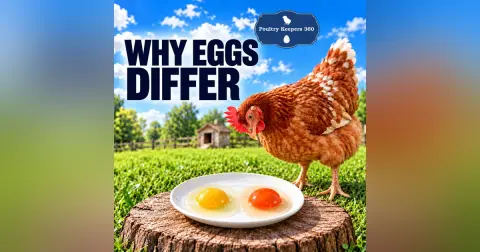
Does a deep orange yolk mean a more nutritious egg? Why do some eggs taste richer or develop a fishy flavor? And what causes watery whites or thin shells?
In this Audio Edition of our member-led PK360 egg show, Rip Stalvey hosts a discussion with team members Jeff Mattocks, Carey Blackmon, and Sue Dobson. Together, they work through the questions poultry keepers sent us. We discuss how feed, forage, breed, and the hen herself can affect egg flavor, yolk color, fatty acids, texture, and shell quality. We also talk about what a “complete feed” label tells you when choosing feed for laying hens.
The Egg Nutrition and Flavor Research Guide mentioned in the show is available in the Files section of the Poultry Keepers 360 and Poultry Breeders Nutrition Facebook groups. It includes links to nine research papers for keepers who want to explore these questions further.
CHAPTERS
0:00 What makes a better egg?
0:57 What gives eggs their flavor?
2:13 Do breed and genetics change egg flavor?
4:14 What causes a fishy smell or taste?
7:58 Free ranging, flavor, and yolk color
11:05 Why yolks differ—and what color tells us
17:44 A member question about fragile yolks
20:26 Beak and leg color in laying hens
25:00 Corn, soy, and omega-enriched feeds
35:49 Watery whites, texture, and hard-to-peel eggs
38:02 Thin shells, meat spots, and unusual eggs
42:08 What does “complete feed” mean?
43:38 A word from our sponsor, Fertrell
46:25 Research behind feed and egg claims
48:01 Egg Nutrition and Flavor Research Guide
53:04 Changing protein levels as hens mature
55:00 Find past PK360 LIVEs by topic
56:09 Selecting hens for egg capacity
Poultry Keepers 360: Helping Poultry Keepers Make Better Decisions.
Join our Facebook Groups:
Poultry Keepers 360 - - https://www.facebook.com/groups/354973752688125
Poultry Breeders Nutrition - https://www.facebook.com/groups/4908798409211973
Hello and welcome to Poultry Keepers 360 Live. Have you ever cracked open one of your eggs and seen a nice deep orange yolk and thought, now that's a good egg? You might have even noticed that some of your eggs taste richer than others, some have stronger shells, some simply look better on the plate. But do these differences actually mean the egg is more nutritious, or are they telling you something else? Tonight we're going to talk about all of that, and I'll I'll start with this. You know, this show was basically instigated by our listeners who wanted to know information about egg nutrition and what causes what. So that's exactly what we're going to be talking about tonight. We're going to start off with flavor and its influences. Jeff, what makes some eggs taste noticeably better, richer, or maybe even sweeter? I've noticed some eggs sometimes taste a little sweeter than others.
SPEAKER_05My mentor 30 years ago pounded into my head that flavor is in the fat. Okay, so the fat that the bird is consuming in its whatever diet, you know, whether it's free ranging, whether it's pellets, whatever, that is going to be your predominant flavor push. You know, and uh like I noticed, or many people have noticed, up here I like to use the roasted soybeans in my diet because they're readily accessible. And when people switch from soybean meal to a roasted soybean, the yolk gets a lot more creamier and richer flavored. It it takes on a little bit of the nut flavor and it takes on a little bit of its own buttery flavor all by itself.
SPEAKER_02Wow.
SPEAKER_05That's interesting. Flavors in the fat.
SPEAKER_04It is interesting.
SPEAKER_01And for the three of y'all, how much do you think breed and genetics influence egg flavor compared with maybe feed free ranging or management techniques?
SPEAKER_00I was I would think it would be more what they eat than anything. I don't know that the type of bird would have a whole lot to do with it.
SPEAKER_02You're right. Sue, what do you think? That's the end of it.
SPEAKER_04I I can't imagine that a breed would influence flavor when they're all fed the same thing.
SPEAKER_00I mean, I've got a couple different breeds at my house, and I can't tell the difference between the eggs, the way they taste.
SPEAKER_01Sue, I know you got cribs and reds. Can you tell the difference in their eggs?
SPEAKER_04No. No. No.
SPEAKER_01That's been pretty much my experience too.
SPEAKER_04Yeah. Although I did have a a little old man patient that he he would not eat anything but brown eggs. Don't bring him one of those blue eggs because they taste different.
SPEAKER_00Look, I've I've got a customer that buys his chicken feed from me, and he has brown egg layers, Rhode Island Reds, and I think he's got some commercial ones too. And he's also got a small flock of legards. And I said, What like why why do you have like five of those? That's so much different from what else you have. And he said, My wife refuses to eat anything but a white egg. I said, Why? She says they taste different.
SPEAKER_01I said, Well, happy wife, happy life.
SPEAKER_04Yeah.
SPEAKER_01Goes back to that old thing, we eat with our eyes first.
SPEAKER_04Yeah, yeah.
SPEAKER_01Jeff, and you and I have talked about this on several occasions. What causes eggs to develop a fishy smell or flavor? Most folks think it's fish meal, but there's some other things that can cause it too, am I not right?
SPEAKER_05And again, it is the fat that is transferring from the diet. So believe it or not, if you fed up your, and ask me how I know this. If you fed your birds a whole bunch of earthworms, right, nightcrawlers, uh, you're gonna get that flavor.
SPEAKER_01And I don't know what that tastes like, but I don't want to find out.
SPEAKER_05Yeah. Um but yet uh if you feed too high levels of canola or canola meal, canola oil can also and then canola in combination with fish makes it even worse.
SPEAKER_04So interesting. Okay, yeah.
SPEAKER_05So, you know, your fats can antagonize each other and make them and push them.
SPEAKER_01Rob made a comment here said I would think diet is almost all of it. But I have had a pen of birds where one egg has a slight yellow yolk and the rest are darker.
SPEAKER_00Yeah, I was I was actually typing a response to him because I'm curious if he's got a ton of feeder space. Maybe that one hen is the last one to the feeder. If she don't get the choice, yeah. Or you know, she don't know. He may just whatever, you know, whatever he's got in his feed that affects it, that that hen may be choice eating. A lot more picky eaters.
SPEAKER_05Also, older older hen and your heaviest layer, the yolk will pale out sooner than the rest. Yeah. You can tell by looking at their beak and their legs and parts of their body, but your best layers are gonna run out of xanthophil or keratenoids quicker than you know your part-time layers. Yeah, so if you got a bird laying an egg every day, and you got one laying an egg every three days, I guess he's gonna run out of yellow fast.
SPEAKER_00So that that full timer needs more nutrition than the part-timer.
SPEAKER_05Needs more grass, needs more alfalfa, needs more corn, needs more whatever. So, I mean, that's where the flavor's coming from. Oh, yeah. Unless you're on a commercial feed, and then they have other additives, but I think Rip's gonna get to that anyway.
SPEAKER_01Yep, that's coming up in a little bit.
SPEAKER_00Rip, I just gotta say, I love that hat you're wearing. You do? I do.
SPEAKER_01Well, y'all gonna have one as soon as we get to Ohio.
SPEAKER_04All right.
SPEAKER_01I got a hat for all of us. Did you get any spares made? No. They were a little bit on the pricey side.
SPEAKER_00Oh, I was gonna say they took it. That's it, embroidered, right?
SPEAKER_01Yes.
SPEAKER_00That is a lot of points. Well, we that embroidery costs as much or more than the hat.
SPEAKER_01We're getting off track here. Let's kind of get back on what we're talking about. That's one thing people fuss at me about. Let's talk about nutrition and yolk color since we're almost there anyway. How does free ranging affect flavor, nutrition, and yolk color? Jeff, what's your thoughts on that?
SPEAKER_05It affects all the above. Right. So, you know, every cricket, every insect, every grasshopper, you know, you name it, being able to self-select different grasses when they want it, all goes into that yolk color and flavor, right? And we'll deepen it quite a bit. And free ranging, you know, we've always known it, right? For those of us who let our birds out, you know, a couple days later the yolks are darker. Yeah. More orange.
SPEAKER_01Yeah, Rob says, I have too many birds to know who lays what. Except for his one white lair.
SPEAKER_00That must be the only one that lays white eggs.
SPEAKER_01Before we get too far, we had a second part on that flavor question that I forgot to ask, and and I want to get everybody's. We had a great response in questions, and I want to try to get as many of them answered as we possibly can. Now, some of them were duplicates, but this question is about waterfowl egg flavor. And they're saying could it be genetics fish or kelp meal or omega-3 enriched feed play role?
SPEAKER_05Well, and I think you everything you feed, waterfowl or a chicken, is going to change the nutrition profile. And it's going to change the flavor. Now, I will tell you that waterfowl, and I don't know why, are more prone to pass like the fishy flavors and the off-flavorings quicker than a chicken's interaction. I don't know if their digestive tract is that much more efficient or what. But now, you know, I also know that waterfowl tend to they thrive on a higher fat, they deposit more fat to their body. So I'm thinking it's a digestive efficiency that they can get more of the fats out of what they're eating. Because if you ever look at a mature waterfowl carcass, they inevitably are carrying more body fat than a chicken does or should. Right. But yeah.
SPEAKER_00Yeah, they got a lot. Yeah.
SPEAKER_01Okay, up to the next nutrition question here. Why can hens eating the same feed produce different yolk colors? Does a darker orange yolk really mean a more nutritious egg?
SPEAKER_05Okay. So you've got that one. You know, it depends on the age of the bird, were they properly molted, or were they allowed to properly molt. Okay. So age is going to be your number one contributing factor, especially if they're all eating the same thing. Right. So age is usually the biggest thing that is the contributing factor on that yolk color and her ability to deposit nutrients. I'm going to jump ahead and I'm sorry, but go ahead. Go ahead. Yoke, yolk color, darker yolk color does not mean more nutrients. That that is a that is a false statement. But today's consumer has been duped into believing through commercials and advertisements that yolk should be orange, right? All the time. Right? And that's not the nature.
SPEAKER_00So they will be if you buy whatever foods in that advertisement. Right.
SPEAKER_01I don't know if y'all have go ahead, Jeff. I'm sorry.
SPEAKER_05Well, it's all right. You know, so it's the transfer of carotenoids, right? From well, what they stored in their body, right? So as their pullets coming up through, you'd ever notice that your pullets have the darkest yellow legs, right? And that and right before lay is the darkest they'll ever be. And then once they start laying, they turn white. Okay. So that's gonna be so age is your biggest contributing factor. But now feed companies are jumping in the on the bandwagon to sell people marigolds and and dried peppers to make those yolks look better.
SPEAKER_01You know, we've talked about egg color, and I don't know if any of you guys, gals, have noticed the eggs in England. They prefer a much darker orange yolk and it looks almost fluorescent. And some of them are so dark they're almost red colored, but that's what the consumers prefer over there. So they have to feed their birds to get that.
SPEAKER_04That's interesting. I I brought a co-worker of mine a dozen eggs one time, and she told me about three days later, she said, We just couldn't eat those eggs, and I said, Why not? Well, they were orange. The yolks were orange. She was used to the store bought pale yellow runny eggs, and she said we we had to throw them away. We just couldn't uh couldn't eat that orange egg.
SPEAKER_01You know, when my wife and I were first married, okay, I brought her some eggs from the coop. I said, I think I'd like a couple of those with some grits for breakfast this morning. And I went on about my business, and in a minute she hollered at me, she said, Something's the matter with these eggs. Oh Lord, what I went in there and looked at them and I said, Well, it looks pretty normal for me. She said, Well, the yolk's really dark, it's not yellow, and and look how that white stands up in the middle. I said, That's the difference in a fresh egg and the ones you've been buying at the grocery store all these years.
SPEAKER_04Exactly.
SPEAKER_05Actually, it and that now that you you brought you opened this can up, so I'm gonna talk about it, go for it, go for it. But the white staying together, right, when you put it in the pan, and how tall the white is an excellent indicator of the quality of protein that the bird is being fed. Okay. Age plays into it too. You're right, fresh egg versus old egg. But I can tell you, even with like older hands and and stuff like that, if you like, I got some eggs that have been in my in my fridge for over three months. I go crack you some and show you that the white is still tall because the diet is correct.
SPEAKER_01Well, I just start to say those are obviously not the eggs most consumers consumers encounter at their grocery store. Yeah.
SPEAKER_05Well, people don't even like that you can legally keep an egg in cold storage for up to six months and still sell it as a fresh egg. Okay. All they have to do is bring them out, re watch, inspect them, you know, and repack them, and they can change the date. Okay.
SPEAKER_00Yep. Because normally normally what happens is they have 30 days from the grower to get it out to the wholesaler. The wholesaler has 30 days to get it out, and then the grocery store has 30 days to get it to their location. And if they don't sell them really quick, they can do it again.
SPEAKER_05Well, the middleman, the packer, the person, so you get the raw egg from the farmer, you know, on a weekly basis. And then the the intermediary who does the packing to put it in the carton, they keep them in huge coolers, and they don't pack them until they have an order because they don't know if it's going to Publix, Kroger, whatever. Okay. Right. Yeah, they can bring them out and they can run them through the line, put them across the candler, and inspect them again and put them back in, and they have another 30 days. So eggs can be up to six months old before they ever hit the store shelf.
SPEAKER_02Wow.
SPEAKER_05Eagle.
SPEAKER_04I have a question regarding the the egg strength. What makes the yolk just fall apart whenever you drop it into a skillet? This is this is a bird that's one of my older crab hens. Is it her age? Is she not getting enough nutrition?
SPEAKER_05Uh, usually so when I see that, and it could be what you're saying, but with the heat you all have had this summer, yeah, it it if an egg doesn't get collected in the morning, yeah, with with temperatures over 90 degrees, that yolk will degrade. And often over the summer, I'll see a lot of people ask me that question why did the yolk just break apart, you know, when I put it in the pan didn't hold together.
SPEAKER_02Yeah.
SPEAKER_05So, you know, like an egg that stayed in there from the day before for people who only gather once a day, especially when the temperatures are above 85, 90 degrees. Yeah, yeah. Yeah, I would, you know, part of it is her age, right? But I think the biggest part of it is your temperatures you've had this summer.
unknownYeah.
SPEAKER_05And if she's a late layer, you may have missed it. You know what I mean?
SPEAKER_04So she's she lays almost every day, faithfully.
SPEAKER_00It could be some stress from the heat too. Couldn't you?
SPEAKER_04Yeah, yeah.
SPEAKER_05Also drink more water and what during those heat times, and you'll see that the whites will be a little bit runnier.
SPEAKER_04Yes.
SPEAKER_05When they when they eat less and they drink more, the whites will be more runny across the pan.
SPEAKER_02Yeah.
SPEAKER_05And I get that with people who feed too many vegetable scraps. Like, you know, if people have a big garden, yeah. If you take too many vegetable scraps, about three or four days later, they're gonna tell me that their eggs just went all the way across the pan and they're really running. And I know what they did, right? I know what they did, right? Too much watermelon, too much whatever. Okay, you know, it makes a difference.
SPEAKER_04I'll I'll keep an eye on it and see if it improves. So the temperature this morning was 64. Right.
SPEAKER_05So if you can tell her egg better now. Yeah. If you can figure out which egg is hers and check it. Um I I think you're gonna see it improve.
SPEAKER_02I hope so. Okay.
SPEAKER_05If not, then then she's aging out. But yeah, you would have to be like seven or eight years old before you really see a degradation in in yolk follicle.
SPEAKER_02Okay.
SPEAKER_01Okay. What are we looking for? Can you tell which hands are laying currently? I have a four-year-old flock and a two-year-old separate flock, all wine dots. When you're talking about leg color and beak color, it's that's all related to the breeds. You know, if if birds have a yellow skin, then they should have yellow legs and yellow teeth. If they have black, again it's be tied to color, but their legs are gonna be black. But when you're judging, you have to look at the bottom or the soles of the feet. And if they're supposed to have yellow skin, then they better have yellow on the bottom of their feet. If they're supposed to have white skin, then it should be pinkish white. But so that drives a lot of it. Now the intensity of that goes back to what we've been talking about earlier tonight. It is pretty much what they're fed and how well they're laying. The more they lay, the less intense that uh yellow color will be. And you can tell based on that, you can't tell how many eggs are laying per day, but you can tell the hens that are laying on a regular basis as opposed to the hens that are laying sporadically, so to speak. And you can even go ahead.
SPEAKER_05Let me interject here, Rip. So I I think I think a fair number of people may not even understand that. While a pullet is growing and developing before she ever lays an egg, she's storing the yellow or the xantha or the carotenoids in her body. This is a normal process. So there's a gland around the vent, her legs, her beak, etc., where she's storing up extra carotenoids. And then as she's laying, she moves those from the gland, her legs, her beak, and deposits that into the yolk. And that's why you know having that molt and letting her build that back up is a good thing. And focusing on you know giving her extra kerate during that time. So just to go, I I don't think a lot of people realize that the yellows in the body of the chicken that goes into the yolk. And the older they get, the paler they get. Exactly. Or the more they lay, the paler they get.
SPEAKER_01Oh, and let's see, we got another question here. Raymond wants to know does vitamins or tinctures affect egg quality or taste?
SPEAKER_05None of the vitamins that I'm aware of will affect the flavor. Okay. It will help with a little bit more density in the yolk and in the whites, the vitamin side. Tinctures, it really depends on what you're tincturing. Some of the different herbs out there are pungent enough that it would it would change the a little bit change the taste. Like if you were making a really strong oregano tincture and feeding it daily, or time, or you know, you know, herbs that have that stronger, deeper, more pungent, you know, flavor could pass through slightly. Now you would have to be a really discerning, you know, taste buds to pick it out. But yes, it can change the flavor depending on the tincture.
SPEAKER_01Very good. Here's a question, but we've already answered that. And here's a question specific. How do corn, soy, and omega the omega enriched feeds change an egg fatty acids? Can we improve that profile for people without harming the hen or creating unwanted flavors?
SPEAKER_05Repeat the beginning part of that. That was a lot of question all in one.
SPEAKER_01How do corn, soy, and omega-enriched feeds change a fatty, change an egg's fatty acid content?
SPEAKER_05So corn and soy, corn doesn't really move the needle on the omega 6-3 ratio or omega fatty acid profile. Processed or overprocessed soy, like solvent extracted soybean meal, will move that quite a bit. Yeah. So all right, so the studies that we've done when I was on the APA American Pasture Poultry Board, right? We did we did some testing then, and we found that on a soy-free diet, not corn-free diet, the omega-3 to six ratio was one to three. And on a corn-roasted soybean diet, we found that the omega-3 to six ratio was one to six. And then we tested out at the grocery store being fed commodity feeds and garbage, and that was one to eleven omega-three to six ratio. So that should hopefully now the omega enriched. I'm not a fan of what like Eglin's best with some of these companies are doing. You know, they're feeding krill or krill oil, different other, you know, species. Some are feeding high levels of flax. Here's the thing chicken would not eat flax if left to her own accord. If you put out dishes of this, that, and the other, flax and flax meal are gonna be low on the totem pole as far as how much they would eat. They have very poor palatability. They're just not so yeah, I think a good balanced diet and some free ranging is gonna get you really what you want overall. Insects are gonna help your omega-3-6 ratios, you know. So, but we have to be careful because here's the thing with any species, whether we're talking about beef, chickens, eggs, whatever, we no one knows what an animal in the wild or you know, uninfluenced by human beings, what their natural omega-3 to six ratio would be anyway. Okay, so we don't have a baseline of what it should be, and an herbivore's omega fatty acid profile is completely different from a carnivore's fatty acid profile based on what they eat. And we just don't know what the real number is for a chicken. Okay, so I don't chase after that number until I have to, you know, until I don't I don't chase after that for monogastrics because we don't know, you know, what it should be. Really, somebody should should shoot them a feral hog down there in Georgia or Alabama and get that tested, and that would give us, you know, what a hog would be in nature. You know, maybe we should find a true wild bird similar to the size of chicken and get it tested and see where that comes in. And then it would give us an idea of where what is natural for that species. Because we have no idea, right? We're just guessing at it. And everybody's pushing this because they think it's better for human health. And they I'll tell you what, at the end of the day, they don't even know what the right omega-3, one, three to six ratio is for a human being. There's a bunch of crazy doctors out there guessing at it, right?
SPEAKER_02Yeah, yeah.
SPEAKER_05Okay. So nobody knows unless they test, you know, the fat profiles of the caveman before we had influences from modern medicine and and junk food diets. We don't know. We have no idea what it should be.
SPEAKER_01Okay, we have a second part to that question. Can we improve that profile for people without harming the hand or creating unwanted flavors?
SPEAKER_05We don't know. We don't, we don't know, but every time you push the envelope on that higher omega-3, lower omega-6, you definitely change the flavor. And in my case, it's a flavor I don't like. Okay. Interesting. Yeah, I'm coming. It's gonna get more fishy, it's gonna get more strong. Right.
SPEAKER_00It just one that you can't cover up with a little salt, pepper, and garlic.
SPEAKER_05No, not at all. You can smell it all the way across the kitchen.
SPEAKER_01Yeah. Um, you know, I've got one thing I want to, a little anecdote I want to throw in here before we leave the nutrition subject. And we we talk about how nutrition, how it can help the eggs flavor, yada yada yada, even how it can help the bird meat flavor. And my, you know, I I think we've probably all heard you are what you eat. And but my grandfather took it a step further. And when I was a kid, uh we were talking about that, and he said, Well, you really are what you eat eat. Mm-hmm. If you stop and think about it.
SPEAKER_05He's right.
SPEAKER_01And not too bad for a 90-year-old Florida crackle guy with no more than an elementary school education.
SPEAKER_00You know, Riv, the first time I heard you say that, that really made me think about what I eat eat. And sadly for some of our businesses here in town, not been frequenting them as much because I I don't know what the crap the food they have eats. And that's that's become a real concern for me.
SPEAKER_04Yeah. There's a lot of people here at the lake that won't eat fish. They just won't won't do it. Absolutely won't do it.
SPEAKER_05Well, is the water safe in the lake? You know, I mean probably not. Still, if if you get the mid, if if like the catfish might bother me, bottom dwellers would bother me eating them. But those middle fish, you know, like the crappie and things like that, yeah, that don't lay on the bottom, yeah, they should be fine. Yeah. Most of your PCBs and mercury's and things like that pool and lay on the bottom. So it's the bottom fish that I would worry about aging on a regular basis.
SPEAKER_01Yeah. Let's see, we got some more questions and comments here.
unknownOkay.
SPEAKER_01Rob says, I'm assuming those eggs that get warm and have yolks break easily are also less likely to hatch if incubated.
SPEAKER_05If they've sat out and ounced all day above 80 or 90 degrees, yeah, there's a really good chance they're not gonna hatch.
SPEAKER_00Yeah, and on days where it's a hundred, they've already started incubating.
SPEAKER_02Yeah.
SPEAKER_00And I don't think that's the way you want a poached egg.
SPEAKER_01No, I don't think so. Oh here's another one from Rob. He said, I've heard that hemp seed has a perfect omega-3, six, nine ratio, but we can't use it in feed in the U.S. currently. Very high protein tube.
SPEAKER_05Ron, actually, they did approve it almost two years ago, and you can't use it in layer feed. So, yes, we can use hemp seed meal after they press the oil out of it or hemp seed, but you can use hemp products in layer feeds. It has a tentative restricted approval for use within the United States. So if you can find some good high-quality hemp or hemp, you know, hemp seed meal, um, we can use it.
SPEAKER_01And here's a comment from uh Chris says uh grouse, turkey, and pheasant need to be sent in. Maybe red jungle fowl from someone in the South Pacific for the omega-3 ratios.
SPEAKER_05I agree, but there's nobody gonna pay for the test. Nobody cares. I mean, nobody right. The right people are the people with all the money.
SPEAKER_00Um yeah, there's nothing to get the bowler chickens that they care about. Yeah.
SPEAKER_05And they don't test those because they don't want people to know.
SPEAKER_00Yeah, they don't want you to know.
SPEAKER_05But Chris is on the right track, you know. You could get, you know, a grouse turkey. If you pheasants anymore, I'll put and take, but you might be able to get one out of the Dakotas or something where it's been there for long enough to but yeah, a wild turkey, you know, a grouse, pharmigan, any of those, right? Where they've been left alone to eat, you know, what whatever. Um yeah, I would be really curious what those ratios are.
SPEAKER_01Okay, we're gonna move into egg quality texture and defects. Got a couple of questions that uh folks brought in. What causes a difference in egg white firmness and cooked texture, including watery whites, graininess, and hard to peel boiled eggs?
SPEAKER_05Well, we talked about the you know what makes the egg white firmer and the quality of protein. And when the quality of the protein is degraded, the egg white will run and be more watery. Hard to peel, it's easy, it's a fresh egg.
SPEAKER_01Yeah. I don't know that I have encountered a cooked egg that I thought was grainy in texture.
SPEAKER_05When you start getting into some of the weird feeding styles, I mean, when you start getting like way out there into the really strange ways of feeding birds, you can get a grainy white or grainy yolk.
SPEAKER_01But you know, be a little off-putting for me, I think.
SPEAKER_05Well, and this is where I worry about things like people wanting to feed high levels of black soldier fly or meal worms and things like that. So in the right proportions, it's not a problem. But when you go over when you go over a certain limit, then you know things happen.
SPEAKER_01What about I lost my place here? What about hard to peel boiled eggs? I know my mother always blamed that on the egg was hard to peel if it was really fresh. I don't know that I really bought into that, but I've heard it sprayed.
SPEAKER_05Oh no, that's 100%.
SPEAKER_02100%.
SPEAKER_05So you try and hard boil it, you know, an hour after it comes out of the chicken's butt, you got problems.
SPEAKER_01Well, I must admit I've never done that, so I guess I just looked at them.
SPEAKER_05The fresher they are, the fresher they are, the harder they are to feel.
SPEAKER_01Yeah. Next is what causes thin shells, calcium deposits, meat spots, and other unusual eggs. How can we tell whether nutrition, age, heat, stage of lay, or heredity is involved?
SPEAKER_05You had three things I heard calcium deposits and meat spots. What was the other one?
SPEAKER_01Other un thin shells, calcium deposits, meat spots, or other unusual eggs. I'm not sure what they mean by other unusual eggs. It could be shape or whatever.
SPEAKER_05Well, I just got a I just got an email from Austin Blanchard down there, and he cracked an egg and it had a blood spot in it on the inside. Uh not a meat spot, a blood spot. So if the hand, you know, so there's there's blood vessels very close to the lining of the aviduct, and occasionally one of those will burst, and then you'll get a spot of blood in with the white, you know, inside the egg before it gets down to the calcification point. Meat spots tend to come from older hens. Again, it's gonna quit harping on molt, but if she hasn't had time off to repair that oviduct that she's been laying too long, she's gonna be more susceptible to meat spots when she's a lot older, okay, or later in the laying cycle. So completely different. The meat spot will be hard, just like it sounds. It's like a little, like a large pepper flake, you know, a large piece of pepper, but it'll be dark, dark red, and it'll be feel hard, but it'll be inside the yolk. Thin shell does an age thing. I mean, come on. She can only lay so many eggs, and the shell gland gets tired.
SPEAKER_04That poor diet.
SPEAKER_05Yeah, yeah. But people keep throwing extra calcium at it, and that's really not the issue. The other thing I see, and this kind of rubs me the wrong way, but you know, I see people holding up these massive, like double yoked jumbos and things like that, and they're proud of them, and they don't realize, okay, so the eggshell gland where the eggshell is formed, about two and a half, three inches up from the cloaca, okay. That hen only has the ability to secrete only so much calcium. Now, when the egg is a peewee, you know, little thing, it's gonna have a shell on it that's about four times thicker than you want it to be and hard to burn.
SPEAKER_02Yeah.
SPEAKER_05Right? When it's a large or a medium, it has the right shell thickness. When it's a jumbo, the wall on that egg. Okay, same amount of calcium covering every size egg. Wow. People don't understand that jumbo eggs are hard on chickens. Okay, they are they're you don't want jumbos.
unknownNo.
SPEAKER_01There was a hatchery that I was I'm aware of that had been selecting their line of Delawares to lay jumbo eggs. And it got to the point that they could not get any of those eggs to hatch. And so they painted themselves into a corner by selecting for that very large egg size because the shells were just so thin and porous.
SPEAKER_05Yeah. She can only she can only give you so much calcium to cover the egg.
SPEAKER_01What causes thin shells? No, we already got that. Sorry about that. We're gonna switch gears here. We're going through these things a lot faster than I thought we would tonight. Are commercial feed labels are commercial feeds labeled balanced adequate for different types of poultry?
SPEAKER_05I ain't touching that with a ten-foot pole.
SPEAKER_04Adequate.
SPEAKER_00Yeah, well, I'm gonna tell you, I'll say this. I got a feed store. It's no secret. And I carry feed that Jeff formulated that says it is a complete feed. And there's stuff out there that I'd be hard pressed to feed it to my birds. If if I was totally out of food and they didn't eat today, I'd feed it to them. But you open one bag and take a sniff, and you open the other bag and take a sniff, two totally different things. And when you look at the guaranteed analysis on one versus the other, they saw a few tenths of a point difference in some of the key areas.
SPEAKER_05Pretty much everything.
SPEAKER_00Yeah, but they're also fifteen dollars a bag cheaper.
SPEAKER_01Before we go any further, uh, we got so wrapped up and I was so engaged in what we were talking about, I forgot to say thank you for portrail for sponsoring our show. So let's take a few seconds and do that. We would like to take a short break to express our appreciation to the Portrail Company for their sponsorship of the Poultry Keeper 365 programming. Portrail has been a name of sustainable farming and open nutrition for decades, and their commitment to providing high-quality, natural products aligned perfectly with the values we hold here in our poker community. Thank you, Portrail, for partnering with us with our poetry keepers everywhere. We're truly grateful for your dedication and support.
SPEAKER_00I want to add to that. Next, not not Saturday and two days, but next Saturday. For trail is celebrating with an open house their 80th anniversary. And if you want to make a drive up there, Jeff will be in a dunking tank for at least an hour.
SPEAKER_05I'm the first hour I volunteered. I'd be in the dunk tank from 9 a.m. to 10 a.m. There you go. There you go. And I'm I'm hoping that there's not a lot of people then and they don't know how to throw really well.
SPEAKER_00So I'm I'm gonna be honest. I would love to, but I'm not gonna do it. You can do it. I'll watch. You can do it. No.
SPEAKER_05Everybody gets one ticket for the dunk tank.
SPEAKER_00Man, I ain't sleeping like this.
SPEAKER_05I volunteered. Okay, there's a difference between doing it like as a practical joke and doing it to someone who volunteered. And so people buy additional tickets, or they just want to come up and push the button to see me get wet, right? All the proceeds are going to Cornerstone Youth Youth.
SPEAKER_00Oh, right there it is. Do it for the kids.
SPEAKER_05All all the proceeds. So the proceeds are going to get split between the Cornerstone Youth Center and the local volunteer fire department, right? So anything we take in, we're not making, we're not keeping anything, right? Everything goes.
SPEAKER_01We got one more question here. Jeff, you're gonna like this one. How reliable and independent is the research behind commercial poultry feeds and claims about egg nutrition?
SPEAKER_05They are actually pretty rich. Okay, so the commercial claims are all run through the USDA or private labs. They have the the test data to prove what they've claimed within reason. Okay, so you know, in our world of nutrition, whether it's animal or human, you you don't run, you don't want to run the risk of claiming something that you can't prove. Um they've done the testing, right? So but you don't want to know how they've got to those numbers, right? You don't really want to know what went in a lot of those feeds. Like I talked about, you know, eglins best, right? They're using krill oil, so they're harvesting krill out of the ocean, right? In order to feed it, you know, and then they fresh the oil out of it and feed it to chickens to get that higher omega-3. So they all have their tricks to the trade, you know, that they're adding. Yeah, it looks good on the label.
SPEAKER_01But anyway. Speaking of research, I put together a list of nine, I think, yes, nine research studies on egg nutrition and flavor. I'm calling it the egg nutrition and flavor research guide. I'm going to upload it into the files of our groups, Poultry Keepers 360 and Poultry Breeders Nutrition, and any other thing I can think of to stick it in there. I'll stick it in there. But it talks about flavors and fishy taints, biofuel, biofortified orange corn increases xanthophil density and yolk pigmentation. Uh, plant carotination, carotenoids, talks about the fatty acids. Uh, there's one here on vitamin D research. I've had people ask me about that from time to time. Review of recent studies of enriched egg and poultry meat, egg-based nutrient delivery system, egg white shell, and internal quality. And uh you can if you want one of these, you can pick it up. Right on our poultry keepers 360 Facebook group or the poultry beaters Facebook group.
SPEAKER_05You're gonna load them, you're gonna load them up tomorrow sometime.
SPEAKER_01Yeah, I'll try to get doing first thing. And I guess somebody's ears were burning when we said we hadn't seen them on here in a while.
SPEAKER_04Hi, Shaggy.
SPEAKER_01Hey buddy.
SPEAKER_04Shaggy and Laura's both here.
SPEAKER_01Yeah, goodness. And yes, Rob had another comment here. He said, I had a guinea that laid big eggs. I thought it was really great, but then she prolapsed and died.
SPEAKER_05Yep, if she does it for too long, that's what happens. So but he also had a comment that and I've proven this, but so when I do my hard-boiled eggs in my Instapot, which is basically like a pressure pot, they peel much easier.
unknownOkay.
SPEAKER_00Yeah, they do.
SPEAKER_01Oh, there was somebody in it and I missed it. I just when you said that they were talking about steaming them like you do broccoli and yeah, that's what that's what I just had up there.
SPEAKER_05Or did I hit the wrong one? Anyway, yeah, if you steam them. Oh yeah.
SPEAKER_01I'll pay attention next time, Jeff. Sorry.
SPEAKER_05And then like I said, I do mine on the in-spot. The other thing that helps with the really fresh eggs is when I'm putting them in the cold water bath to cool them off quickly, I'll make a small crack in the shell to let water seep in. The water will go in around between the shell and the egg. It makes them easier to peel. Just a small, small crack.
SPEAKER_01While I'm thinking about it, you know, we we told you, I believe it was the last show, uh, we're all four going to be at the Ohio National. Uh at a big poultry show in Columbus, Ohio. And we hope you'll stop by and see us. And we, for those of you who come and stop by our booth, we've got your very little Poultry Keepers 360 observation journal. You can take home. It's got uh you may not be able to see it here, but it has a uh ruler right here printed on there, and it fits perfect in your rear pocket. I've already tried that out, but if you're going to do that, take the pen out first. It may not end well if you don't. Oops, no pun intended. So we do seriously, we do hope you'll come by and see us and say hi, and we'd we'd love to talk with you and just see what you're up to with your birds. We enjoy hearing that.
SPEAKER_00Um how many birds are you bringing? 900.
SPEAKER_04A car full. So let's see. Six twelve. Uh, probably close to twenty.
SPEAKER_00How many crabs are you bringing?
SPEAKER_04Uh about half, about ten. Nice, ten of each one. Yeah. Yeah, Rick didn't get to meet my crab the last time. I'll I'll bring one up and let him.
SPEAKER_01Oh, good. Please do. Please do. Hey, before we go, do any of you guys have anything you want to share with folks here?
SPEAKER_05Uh we had one last question come in, Rip, so I highlighted it. We're not out of time yet. So if you want to cover it, we can cover it.
SPEAKER_01No, no, no, no, no, that's fine. I have heard that protein percentage should change with the age of the chicken to maintain certain size of eggs.
SPEAKER_05100% correct. So when they come into lay, they tend to be about 80% of their mature weight. So feeding like 18, 19, even 20% protein is good because you're still feeding the body for her to finish maturing, and you're feeding to get the proper egg size. As she once she hits her mature body weight, then you're gonna drop down to around a 17 or 18 percent. And as she continues to get bigger and into that fully granulate, right? You're gonna drop down into like a 16% protein. My commercial flux will start at 20, and we do 1% increment drops all the way through, and we're doing that to maintain the appropriate egg size for marketability, but that same principle holds true for hatching eggs. So, and we did a show on you know eggweeds for hatching and where they should be. So, what was like 55 grams, I thought, is 55 to 60 grams. And if you get too much, now that does depend on breeds. Some breeds are a little bit smaller egg, so it could be 50 to 55, but most of your large egg layers should be 55 to 60 grams, is what you're targeting for your egg weight for hatchet.
SPEAKER_01Jeff just mentioned another video, and if you're unsure on all videos we have done, just this afternoon, a little bit before showtime, I uploaded a spreadsheet to all our groups, and it's all 106 Poultry Keepers 360 Lives. We have done they're entered in there by date they first aired, but that won't be important to you. The key thing to remember, you can sort the spreadsheet. Okay, I have gone in there and put the general topic like nutrition or brooding or breeding or whatever. And if you sort it, you can find everything we've done on breeding or everything we've talked about on nutrition, all right there. And it also has a link that you can use to go straight to that video online.
SPEAKER_05So question for you before we wrap it up. Shaggy has a question. Okay. It's on the screen. Oh, Shaggy.
SPEAKER_01I happen to notice you were live on my way into the gym. Could you go over selecting for egg capacity? Gonna need that soon. Shaggy, is that how many eggs a hen could lay or how many eggs I could eat? There's a big difference in that. I'm sorry, I'm just on a roll and I can't resist myself tonight.
SPEAKER_05You don't eat as much as you used to, Rip. You probably can only do three eggs.
SPEAKER_01I can't even do three about one is my limit now if I got grits to go with it.
SPEAKER_00I used to eat like four or five of them, but then I stopped raising banners.
SPEAKER_01Slackers. Uh Jack, you know, a lot of that's gonna be depending on breed as to how many eggs are gonna lay. That that to me is the biggest factor when I'm selecting pre capacity. But the other key thing is you want a bird that has good body capacity. And we've talked about that before on here on the show. But the body capacity, that's where all your internal organs are, that's where the feed is digested and absorbed, that's where the eggs are created and laid, and that is a key, key factor. Now, I'm not saying go out there and get the biggest bird you can find because it's relative. You know, each breed has a written standard, so you want to make sure that they are balanced when you're looking at them. You don't want a white legon to have the same body capacity as a commercial hybrid egg layer, just not gonna work.
SPEAKER_05So correct me if I'm wrong, Riff. So I'm just gonna kind of go over what I've heard and been told, but like I want to measure like the distance from the end of the keel bone to to the pelvic bones, and and I'm looking for like four fingers width between there as a capacity reading. Now, not you're not gonna do that with a bantam, you're not gonna do that with some breeds, but for most of your large fowls, you know, like the Rhode Island Red, etc. You know, I there should be about, you know, if I can get four fingers, that's a pretty good capacity. Yeah. But the distance from the keel to the pelvic was one of them. And the other one was to put my hand flat on her back. And A, you want a flat back, but you want a back almost as big as your hand.
unknownRight.
SPEAKER_01Well, um what I do when I'm assessing body capacity is I take my fingers, hold them like this, and put them on down over the bird's back, right up behind the wing, and then just slow, just apply a little bit of inward pressure and slide my hand all the way back to the hip bone. And that gives you a pretty good read. But don't stop there, take it all the way back to the tailbone. If you've got a hen that has a really sharp from the hip bone here to the tail, it's not gonna lay very good. But you want a more gradual loop like that, because that gives you more abdominal or body capacity. Okay.
SPEAKER_05Perfect, Shaggy got us to our one-hour mark.
SPEAKER_01Good for you, Shaggy. Yeah. We're gonna be back in two weeks, but while between now and then, think about this. The next time you crack open an egg, you'll know that flavor, color, nutrition, and quality don't necessarily mean the same thing. If you're wondering how feeding decisions affect your hens and the eggs they produce, watch what's really in your chicken feed. That's a program that uh Jeff did with us, and also Fat and Fiber Explained. And that will be linked in our end card on our YouTube as soon as it processes. So we thank you for joining us. We're Poultry Keepers 360, where we're helping you make better poultry keeping decisions. Thanks for joining us, folks. Bye bye.